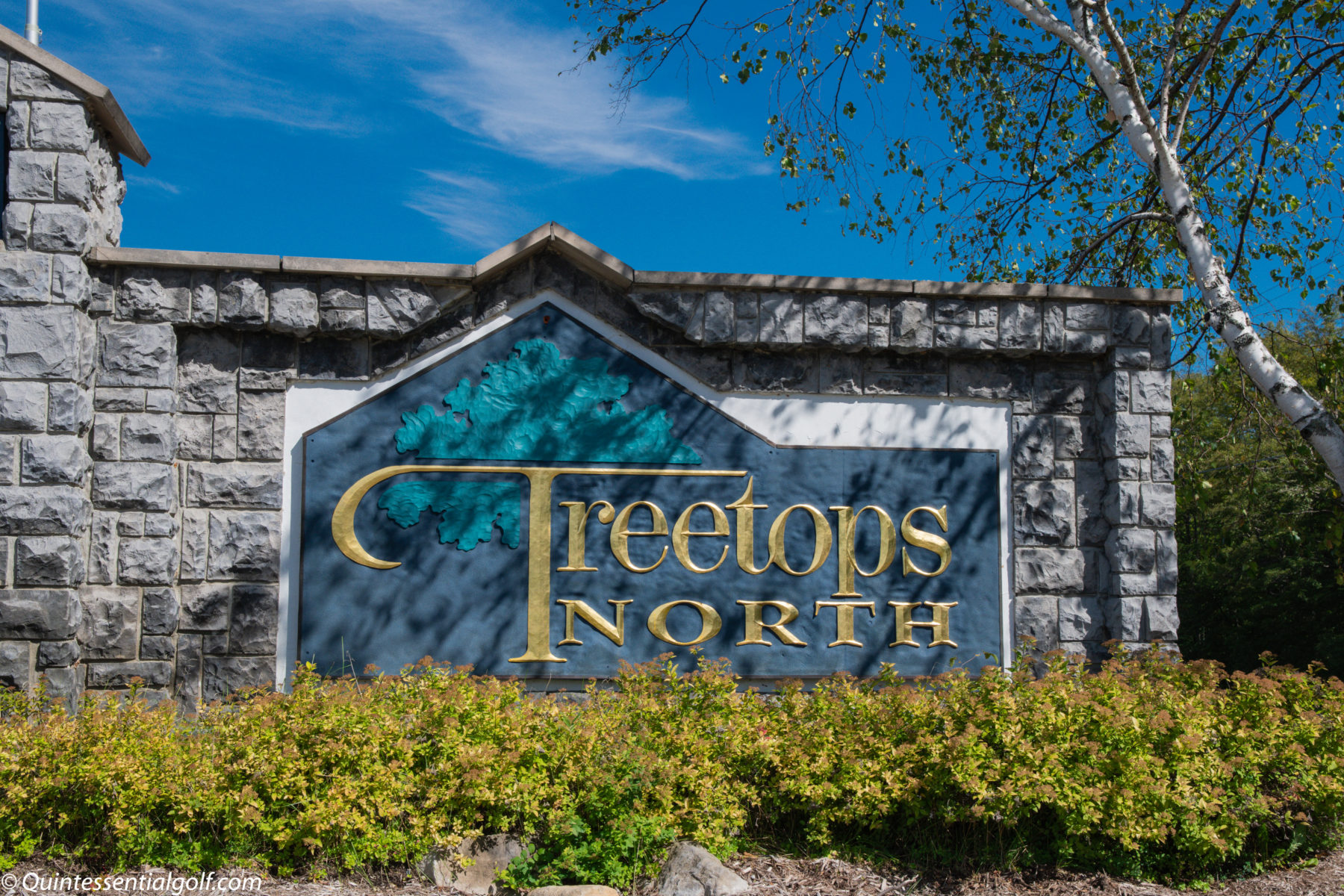
When golfers speak of the great “meccas” of American golf, the conversation usually turns to the windswept dunes of Bandon or the historic pines of Pinehurst. But for those in the know, especially in the Midwest, the pilgrimage leads to Gaylord, Michigan. Specifically, it leads to Treetops Resort, a 1,500-acre sanctuary that has defined Northern Michigan golf for decades.
With five distinct courses that have consistently secured Golf Magazine’s Silver Medal Award, Treetops isn’t just a resort—it’s a multifaceted architectural study. While the resort offers everything from world-class fly-fishing to a luxury spa, the heart of the experience for the serious player is the Smith Signature. It is a course that perfectly balances the dramatic, vertical scale of the region with the technical demands of a championship-caliber track.
The Genesis of Treetops: A Name Born from a View
To understand the Smith Signature, one must first understand the ground it sits on. The resort’s history is a classic American tale of evolution. It all began in 1954 when Ouellette “Lin” Meade opened the Sylvan Knob Ski Area. For nearly thirty years, it was a winter destination, famous for its steep drops and reliable powder.
In 1983, Harry Melling, a Michigan tool company owner with a grander vision, purchased the property. Melling recognized that for the resort to truly thrive, it needed to be a four-season powerhouse. He dove headfirst into the golf business by hiring Robert Trent Jones, Sr., the most prolific and respected architect of the twentieth century.
During an initial site tour, Jones stood atop a hill overlooking the Pigeon River Valley—on what is now the sixth tee of the Masterpiece Course. Observing the grandeur of the expansive view stretching far above the treeline, he turned to Melling and suggested changing the name from Sylvan Knob to Treetops Resort. Melling was ecstatic; a brand was born that perfectly matched the dramatic topography of the land.
Treetops North: The Tactical Epicenter
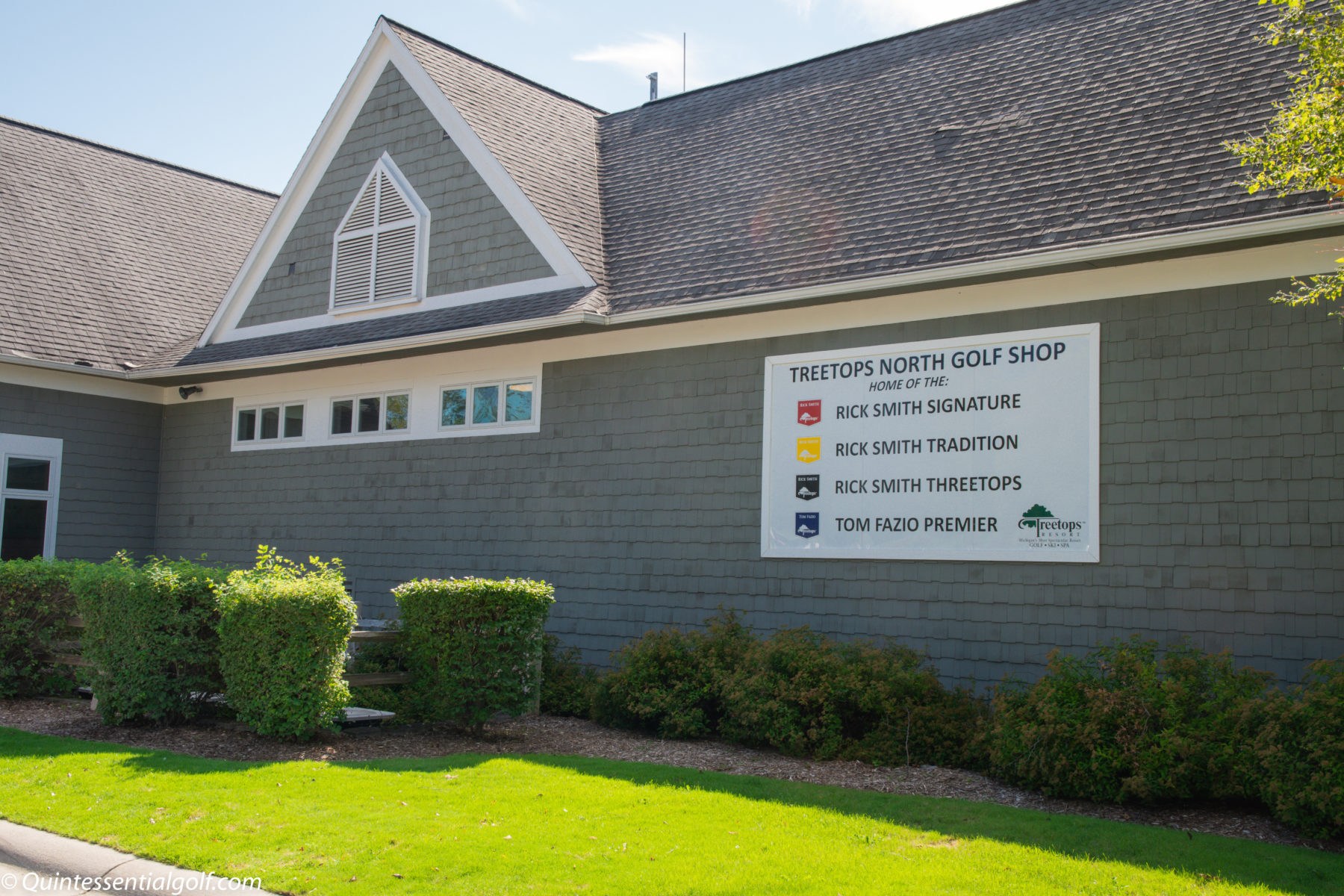
While the original Jones Masterpiece sits next to the main lodge, a short five-mile drive north leads you to the Treetops North complex. This is the “engine room” of the resort’s golf operations. This single parcel of land is home to the Fazio Premier, the Smith Tradition, the world-renowned Threetops par-3 course, and the subject of our focus: the Smith Signature.
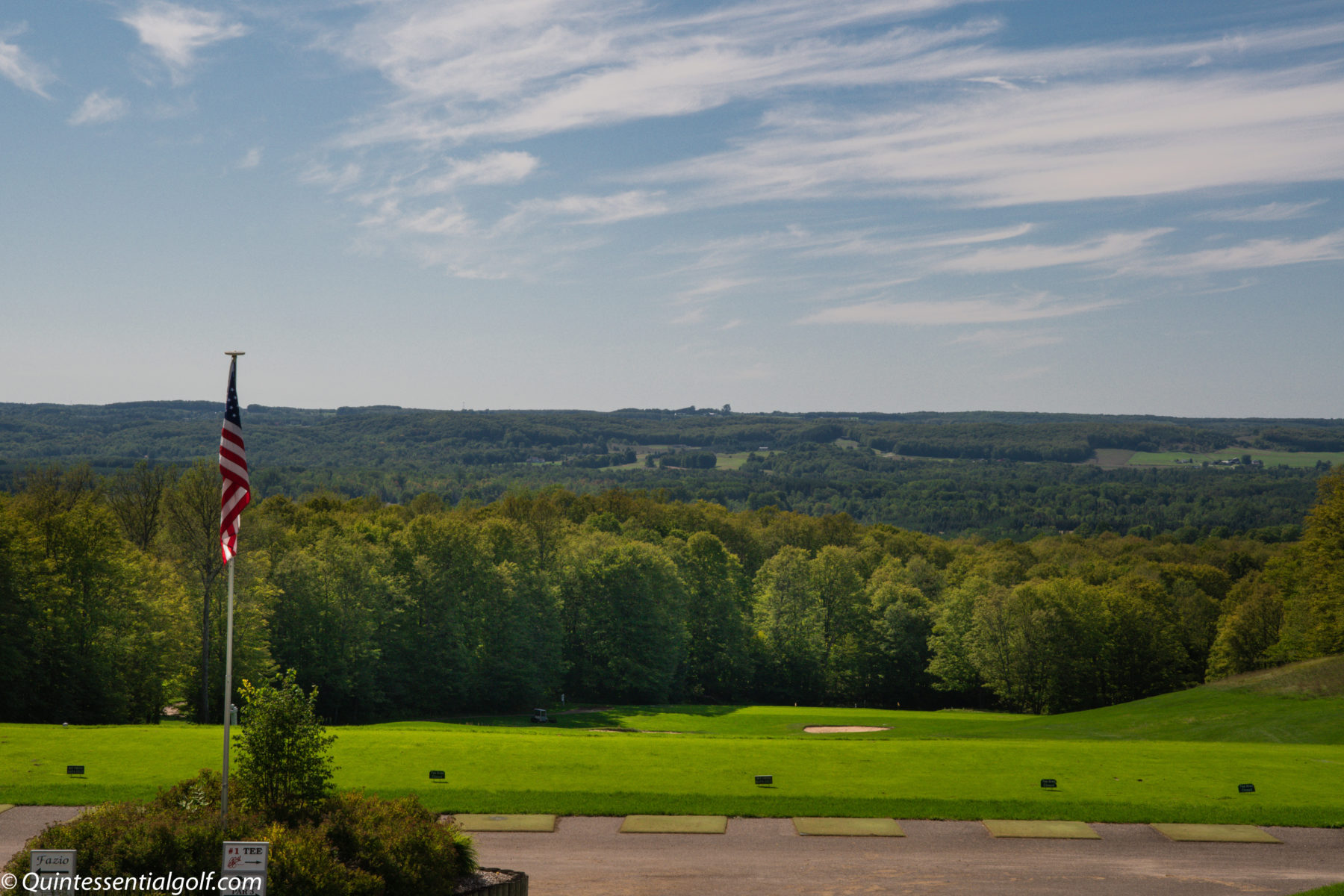
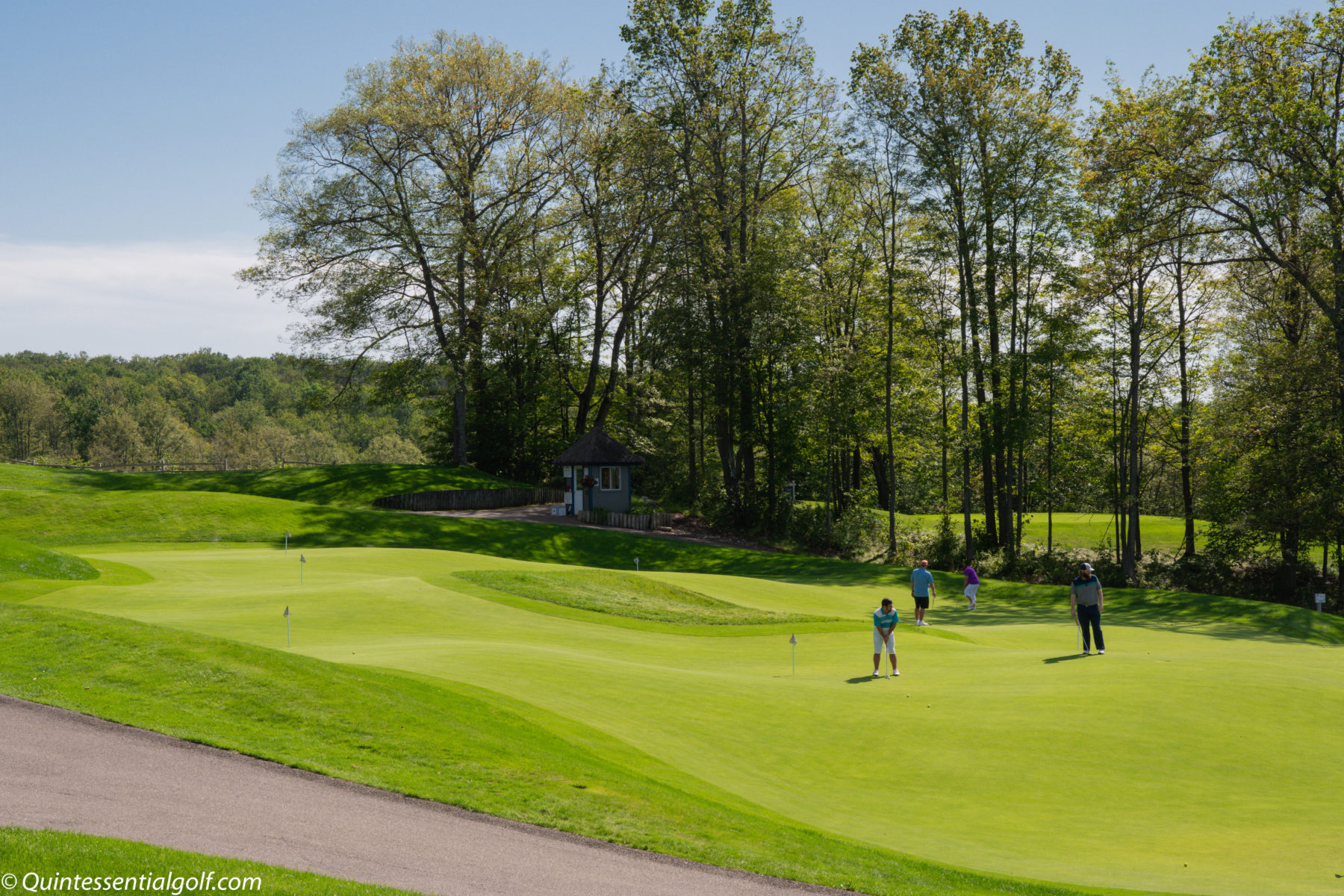
The vibe at Treetops North is purely about the game. From the moment you pull into the expansive practice facility, you realize this isn’t just “resort golf”—it’s a destination designed for the “sticks.”
Architecting the Signature: Rick Smith’s First Masterpiece
Before he was a celebrated architect, Rick Smith was a prominent PGA Tour coach, guiding the likes of Phil Mickelson to major championships. His transition into 18-hole design at Treetops began after the massive success of “Threetops,” arguably the most famous par-3 course in the world.
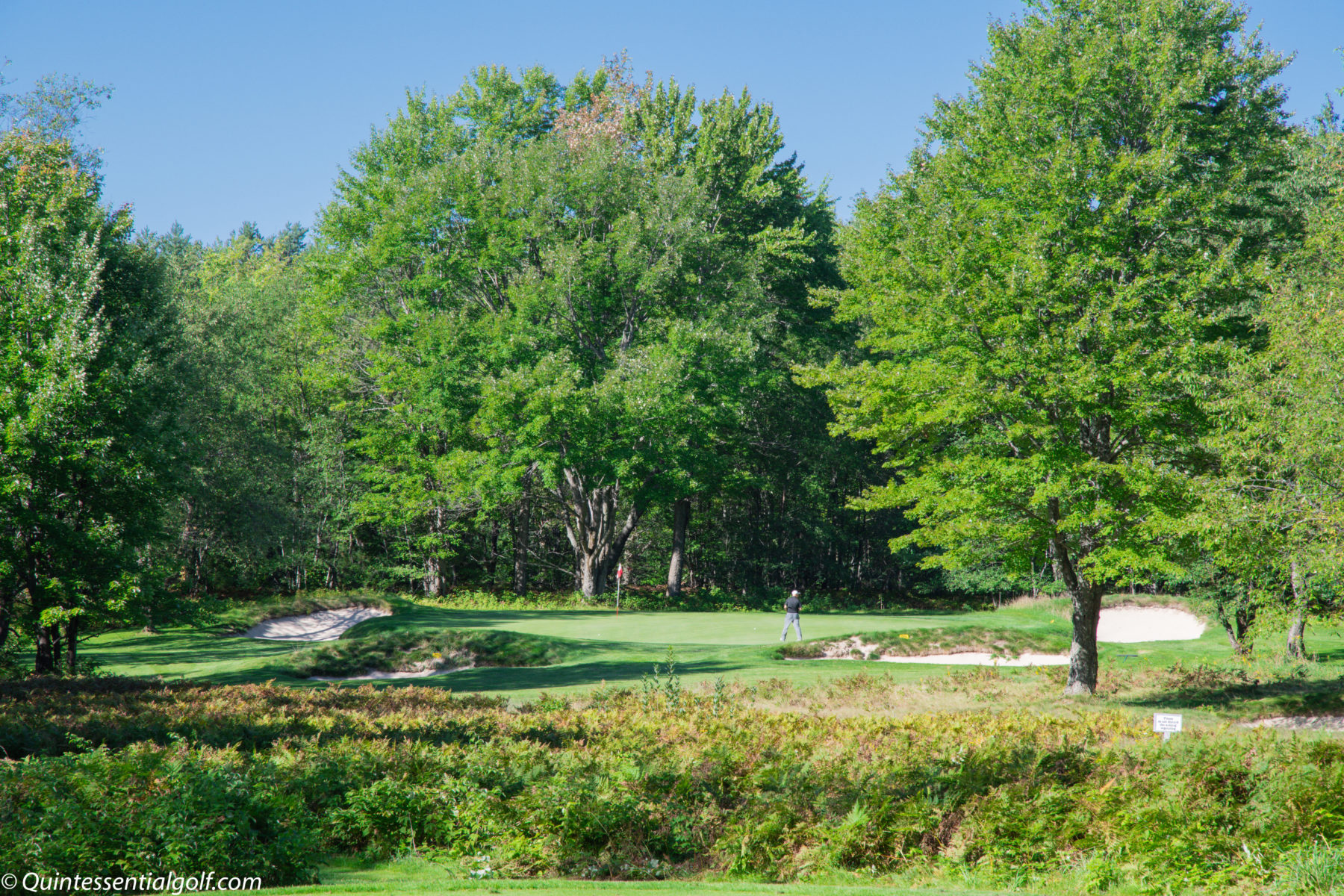
When Melling gave Smith the canvas for his first championship 18, Smith leaned into the land’s natural isolation. He carved the course through a dense forest of maple, spruce, and beech. The result is a layout where almost every hole is a private corridor. You won’t find parallel fairways or the clutter of other groups here. On many tees, you feel as though you and your foursome are the only people in the Michigan wilderness.
Vertigo and Vistas
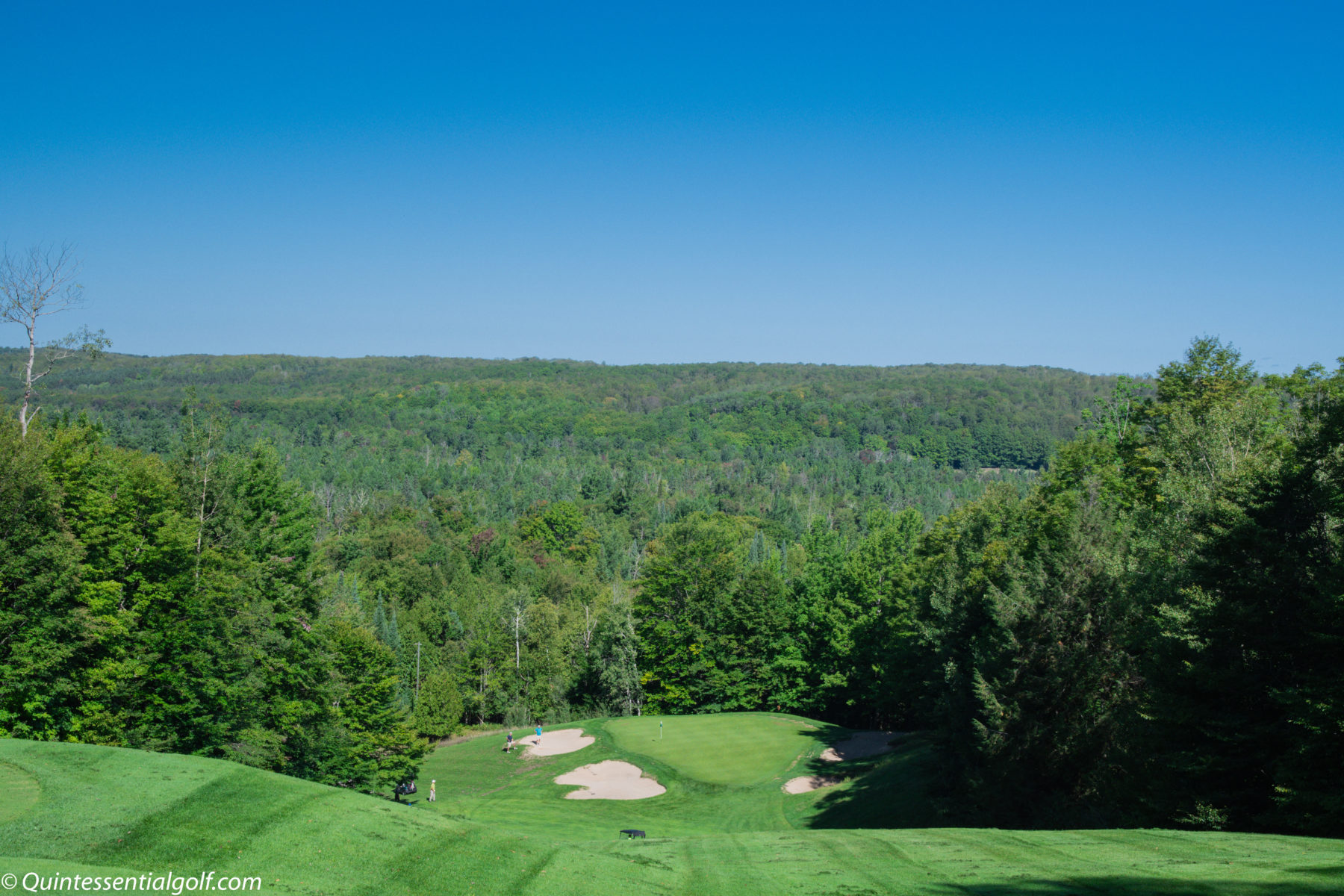
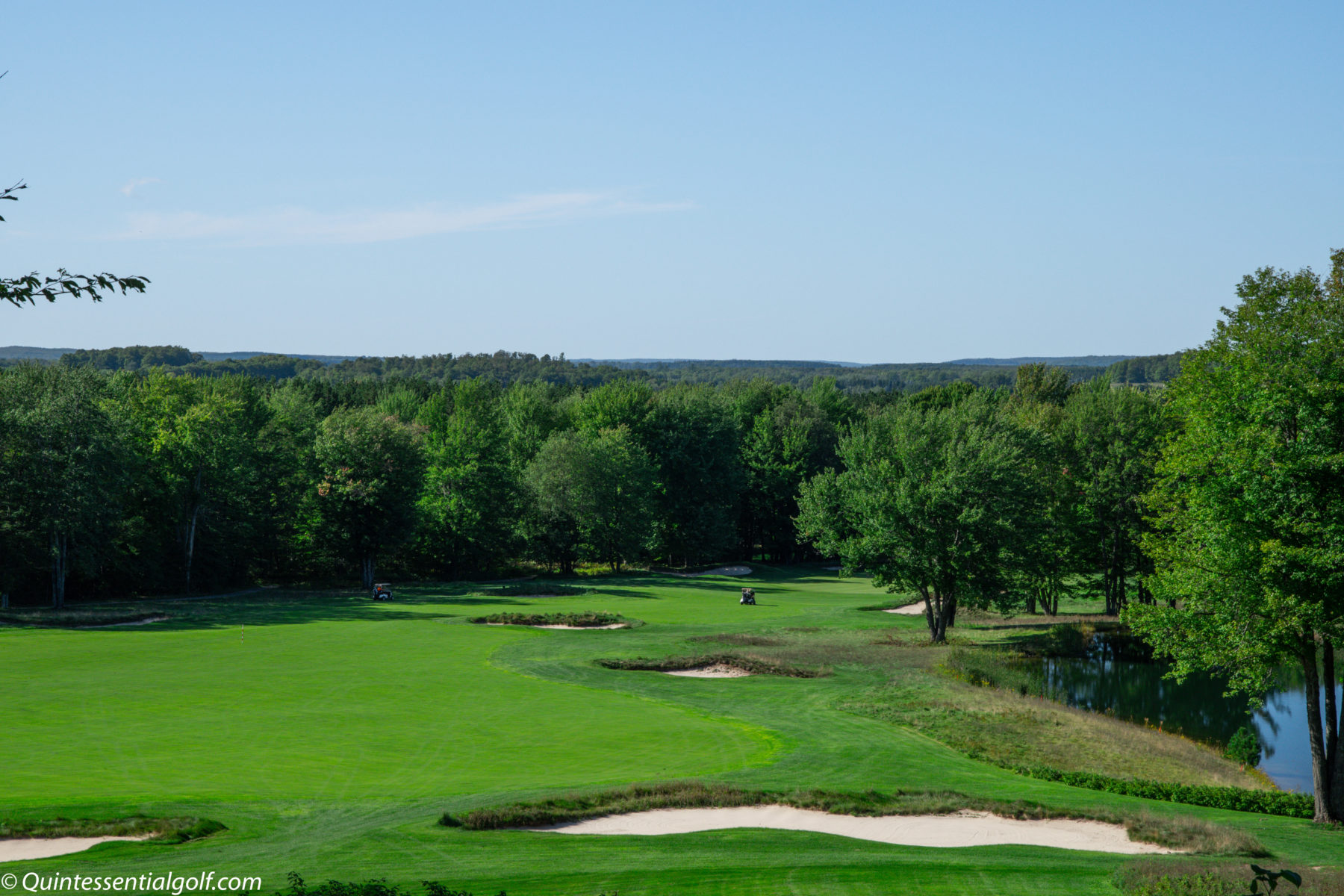
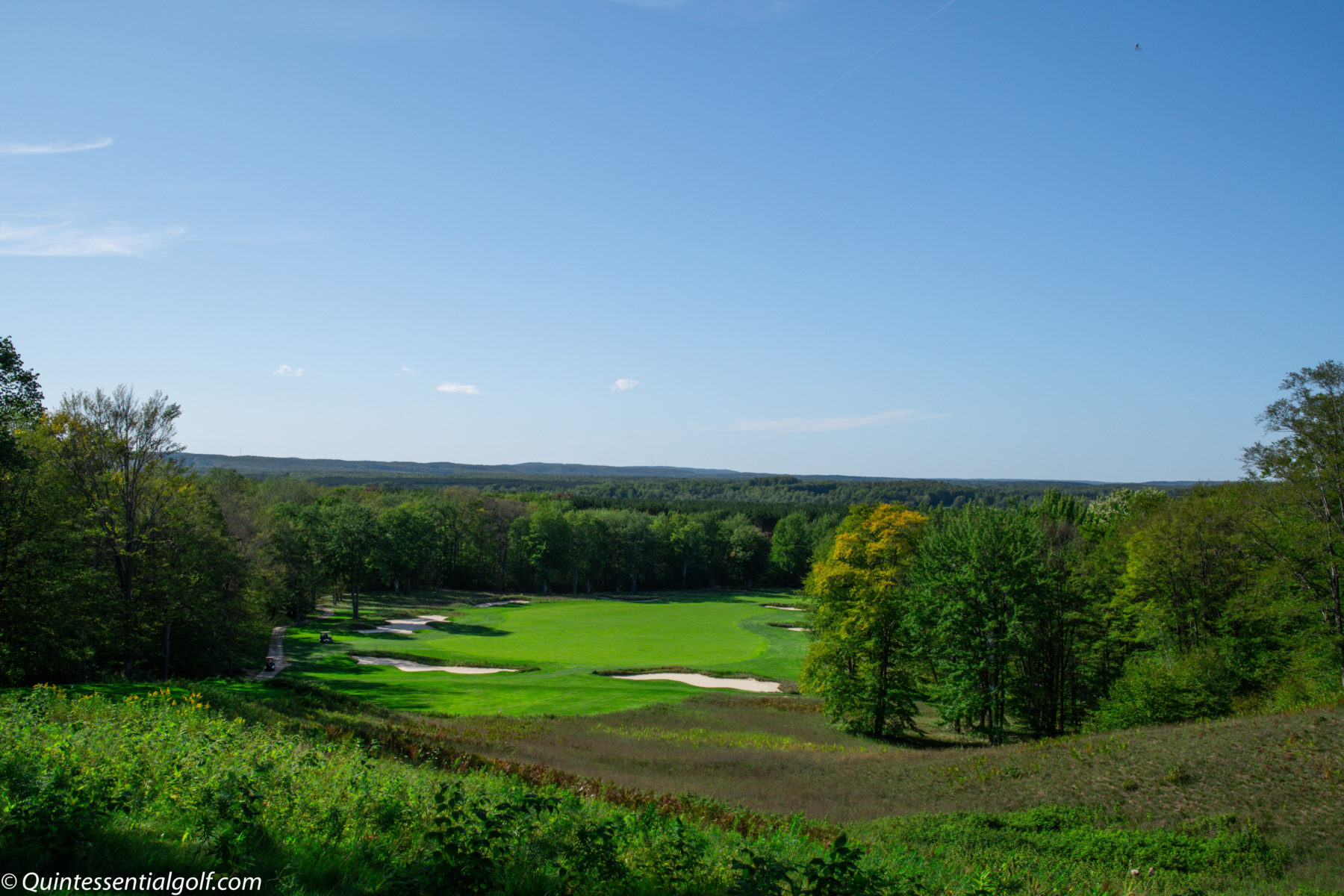
The Signature is arguably the most photographed course on the property, and for good reason. The elevation changes are not merely cosmetic; they are the defining characteristic of the play.
You can see miles of sweeping scenery from the elevated tee boxes. People often cite it as the “locals’ favorite” because it offers the most dramatic visual reward for the effort. However, those views come with a technical price. The high-altitude starts mean wind becomes a significant factor, and your club selection must account for massive drops that can fluctuate as much as two or three clubs depending on the humidity and air density.
Strategic Play: Beyond the “Hit and Hope”
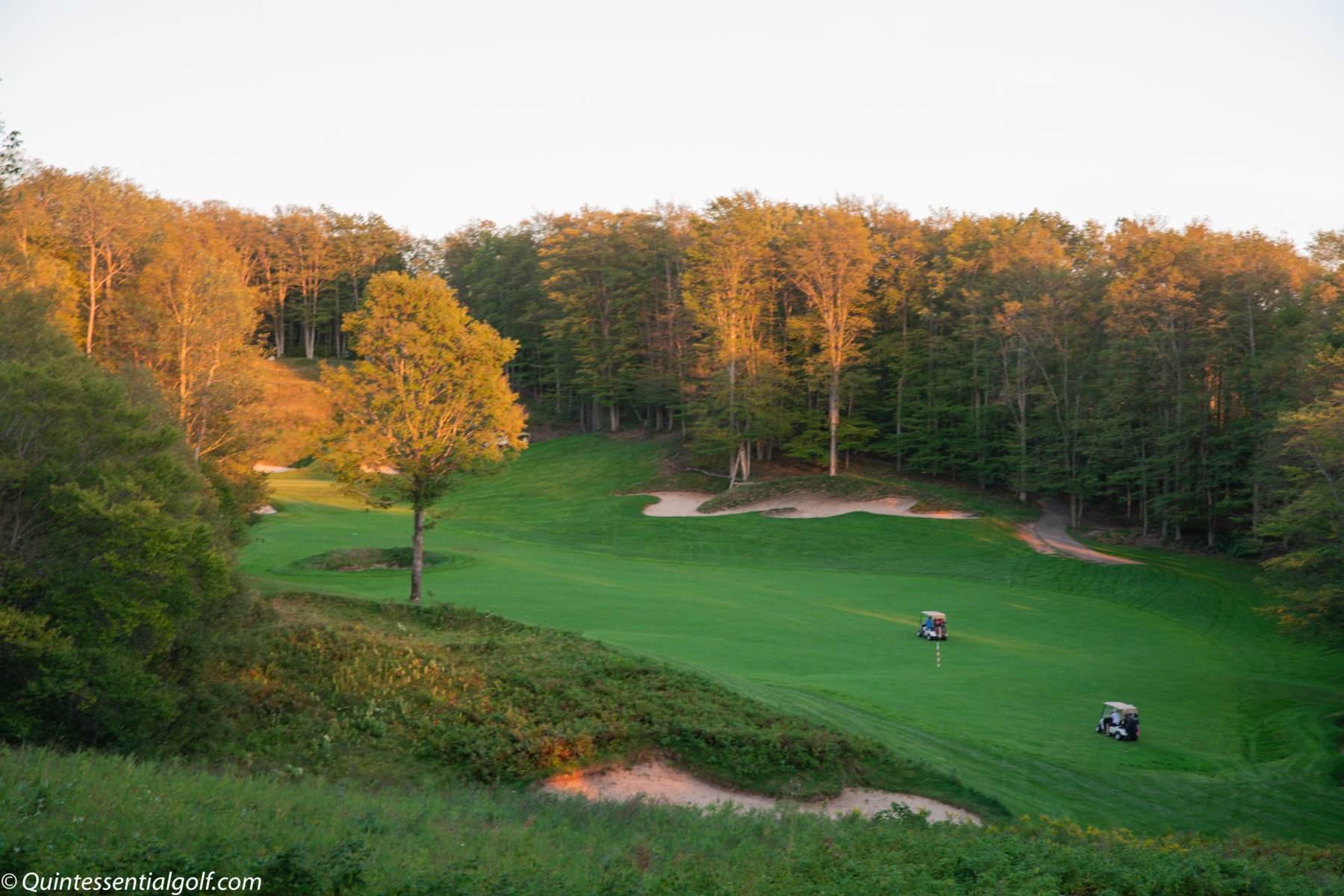
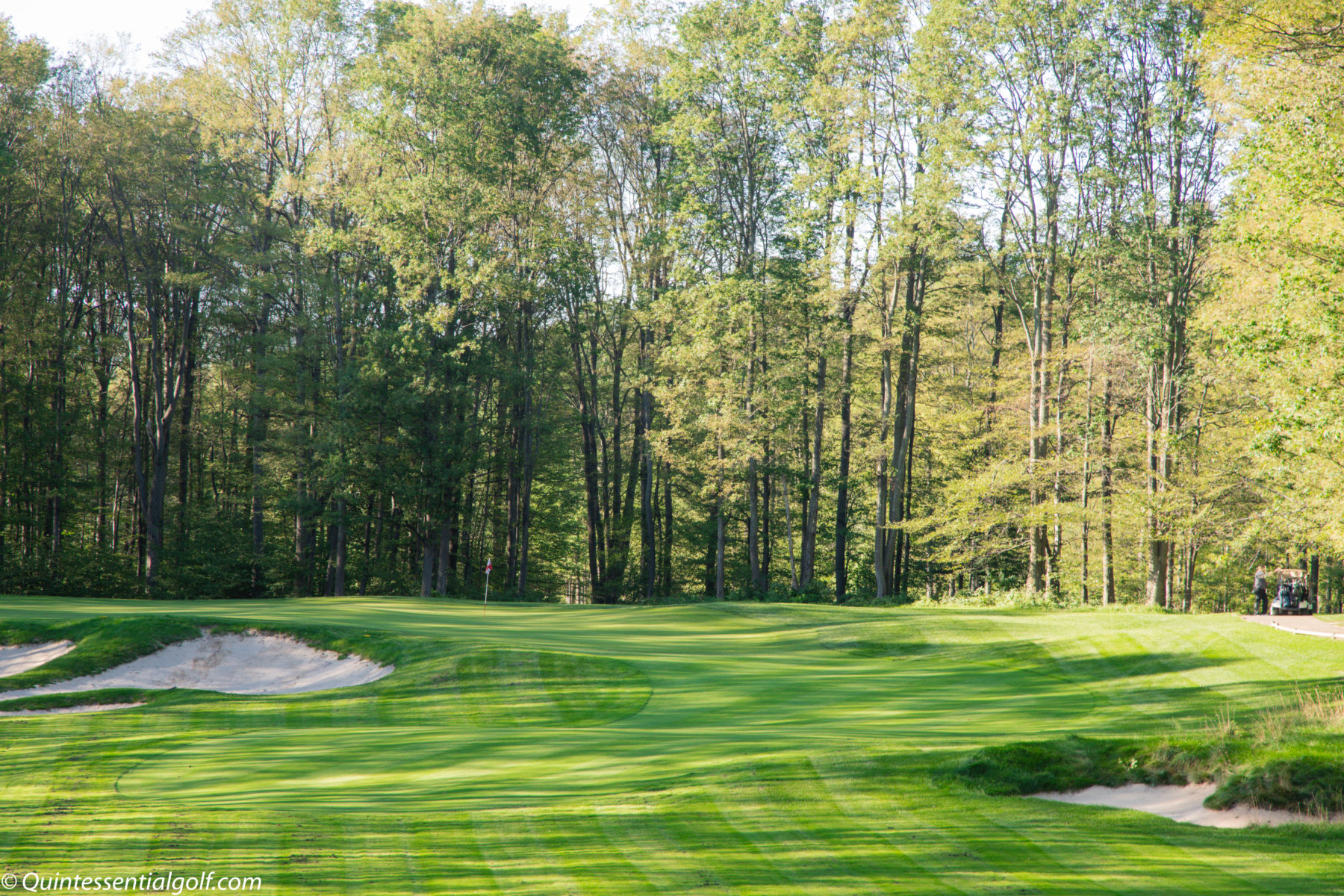
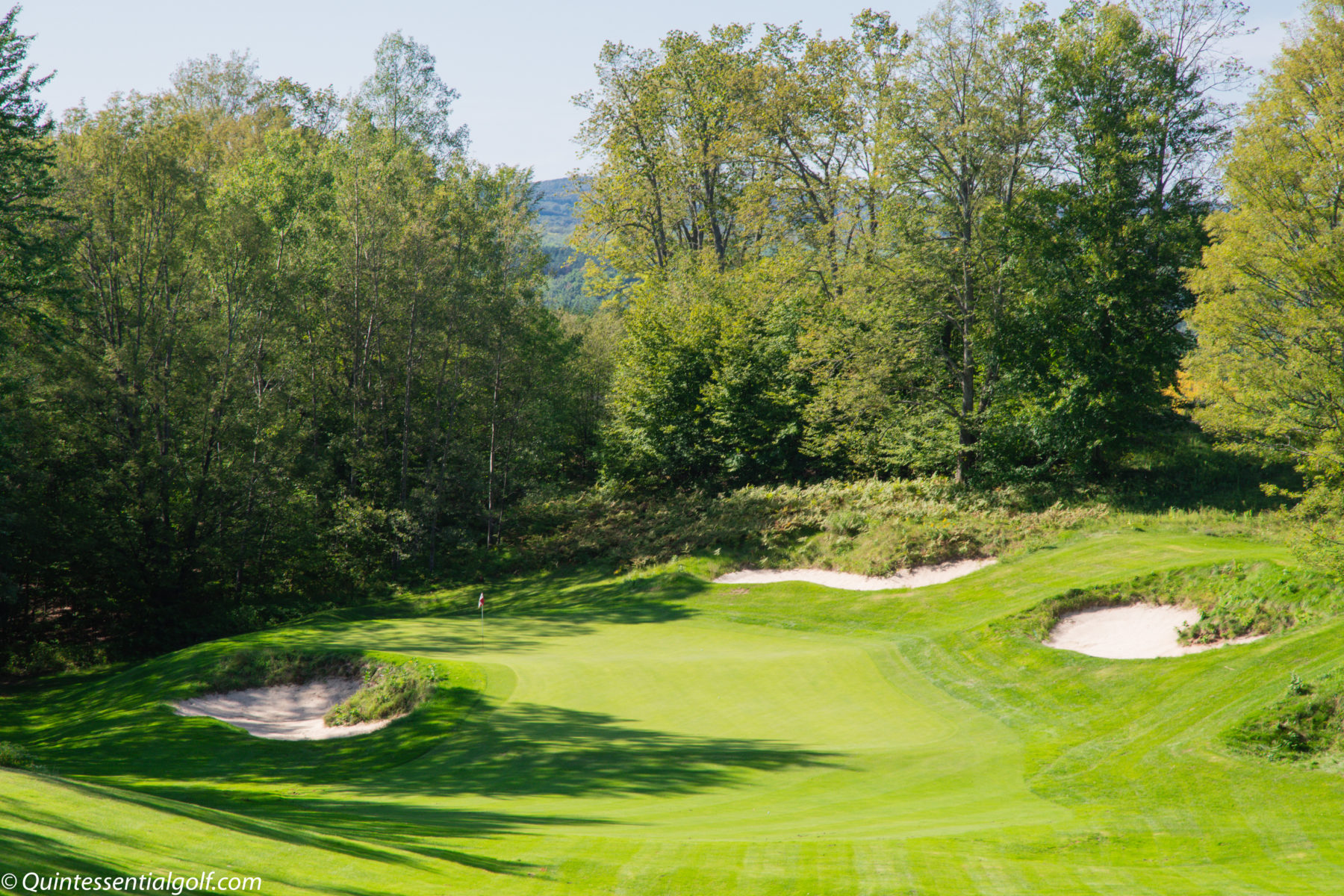
From the tee, Smith is surprisingly generous. The fairways are wide, but they are uniquely—and often oddly—shaped. This is where Smith’s coaching background shines through. He isn’t interested in punishing a slightly offline drive with a lost ball; instead, he punishes you with a poor angle.
The Art of the Angle
A drive to the “fat” part of many fairways might look safe on the GPS, but it often leaves a blind or restricted approach to a tucked pin. To score well on the Signature, you must think like a tactician. Certain green approach angles are significantly more favorable than others, rewarding the player who can work the ball into the correct quadrant of the fairway.
Strategic Bunkering
Smith used strategic bunkering to keep players honest. While some bunkers at Treetops are aesthetic—framing a view or catching a truly wild shot—many of the Signature’s traps are positioned defiantly.
You will frequently encounter bunkers placed squarely in the center of the fairway. These “choice bunkers” force a decision: do you lay back, or do you take the aggressive line to the left or right to open up the green? For the low-handicap player, these are the moments that make the course so engaging. It turns a standard par 5 into a three-act play.
The Greens: A Course Within a Course
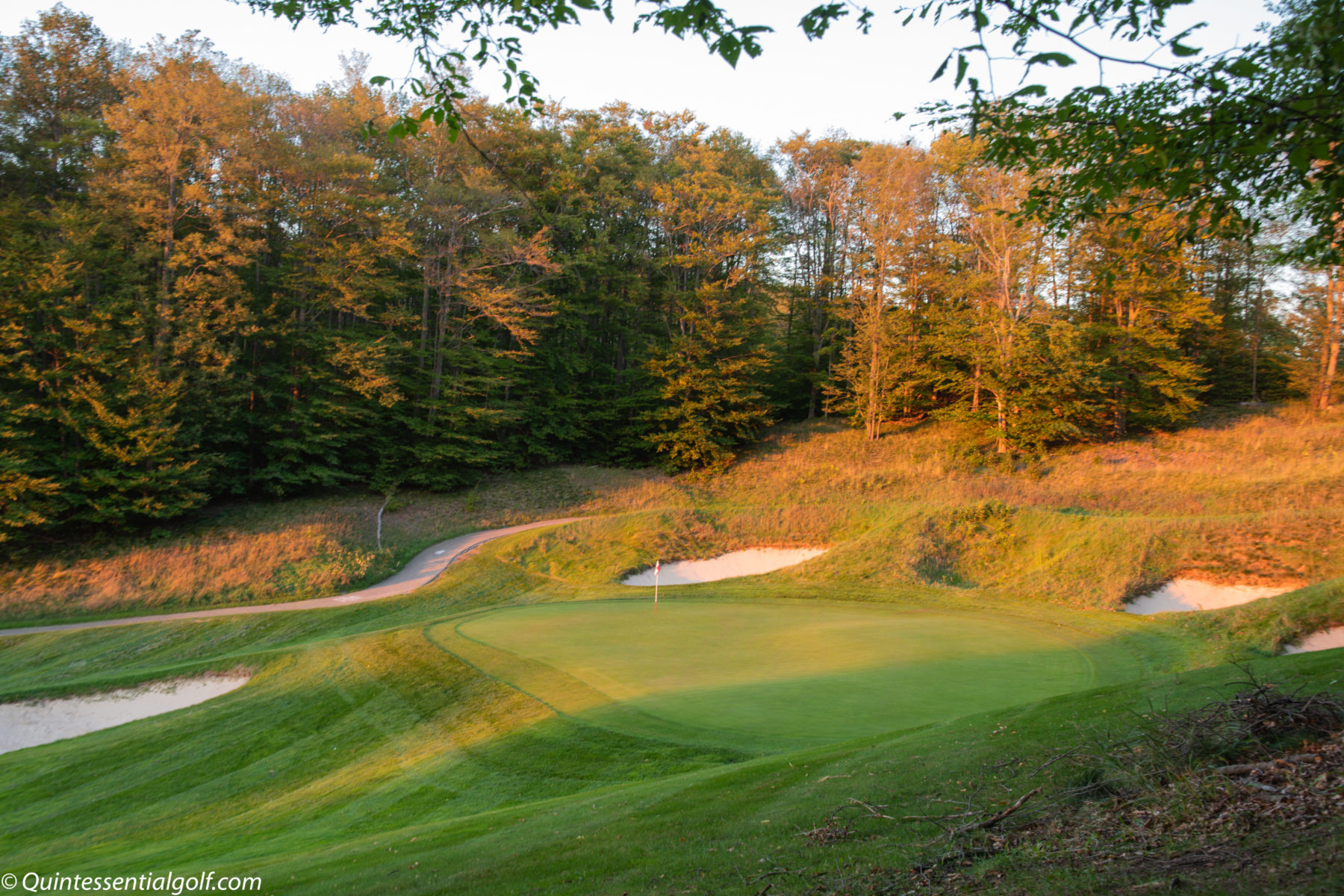
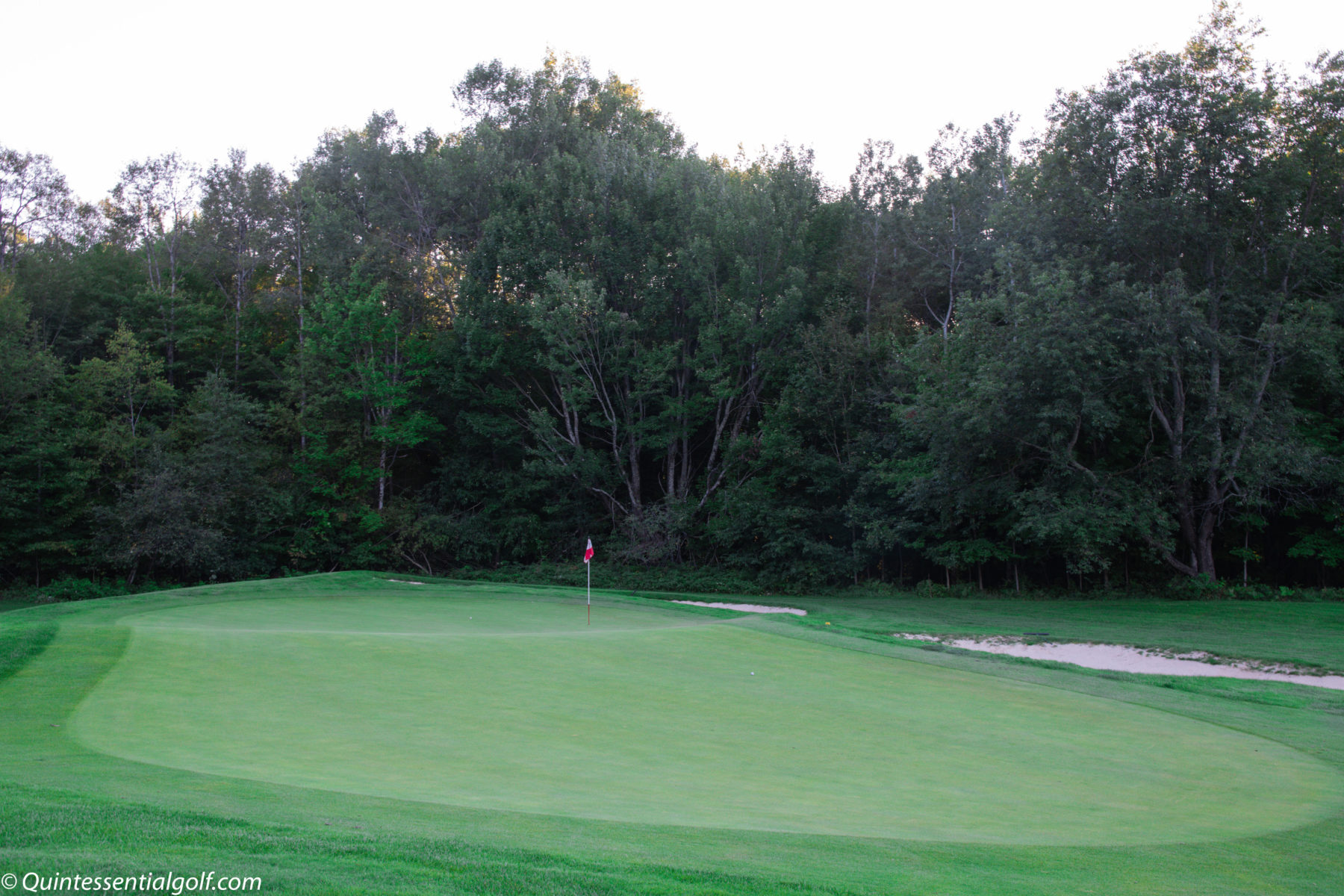
If the fairways are the setup, the greens are the punchline. The Signature’s putting surfaces are notorious for their multi-tiered designs. Smith effectively turns a large green into three smaller, distinct sections.
Finding the correct tier is the difference between a birdie look and a demoralizing three-putt. If you leave your approach on the wrong level, you are essentially navigating a “mountain range” on your way to the cup. This puts a premium on wedge play and distance control. For the player obsessed with metrics like smash factor and spin rate, these greens are the ultimate test of execution.
The “Fun Factor” Meets Championship Grit
The Smith Signature manages a rare feat in course design: it is challenging enough to test a 3-handicap player’s resolve, yet fair enough that a casual guest can have the time of their life.
The routing is rhythmic. It doesn’t beat you up with forced carries on every hole, but it also doesn’t let you fall asleep at the wheel. The ninth hole notably does not return to the clubhouse, which adds to the sense of a grand journey out into the woods. Thankfully, a well-stocked halfway house sits just to the right of the tenth fairway, providing the fuel for the back-nine charge.
The Quintessential Treetops Experience
Staying at Treetops is as much about the camaraderie as it is about the scorecard. The resort offers a variety of lodging options tailored to the golf group:
-
The Jones Cottage: For those who want the ultimate “private club” feel, this is the gold standard for large groups.
-
Condos and Chalets: Perfect for foursomes who want a home base with a kitchen and common area for post-round analysis.
-
Standard Lodging: Comfortable, resort-style rooms just a short walk from the restaurants.
When the sun sets over the Pigeon River Valley and the maple trees turn a fiery orange, there is no better place to be than the outdoor patio with a local craft beer, debating the pin placement on the 15th.
Final Verdict
The Smith Signature is a masterpiece of Northern Michigan architecture. It is a course that stays with you—not because of one specific gimmick, but because of the consistent quality of the holes and the sheer beauty of the environment. It is a masterful balance of technical demand and natural grandeur, set against a backdrop that reminds you exactly why we play this game.
Explore other Midwest golf course profiles from Quintessential Golf Magazine.