












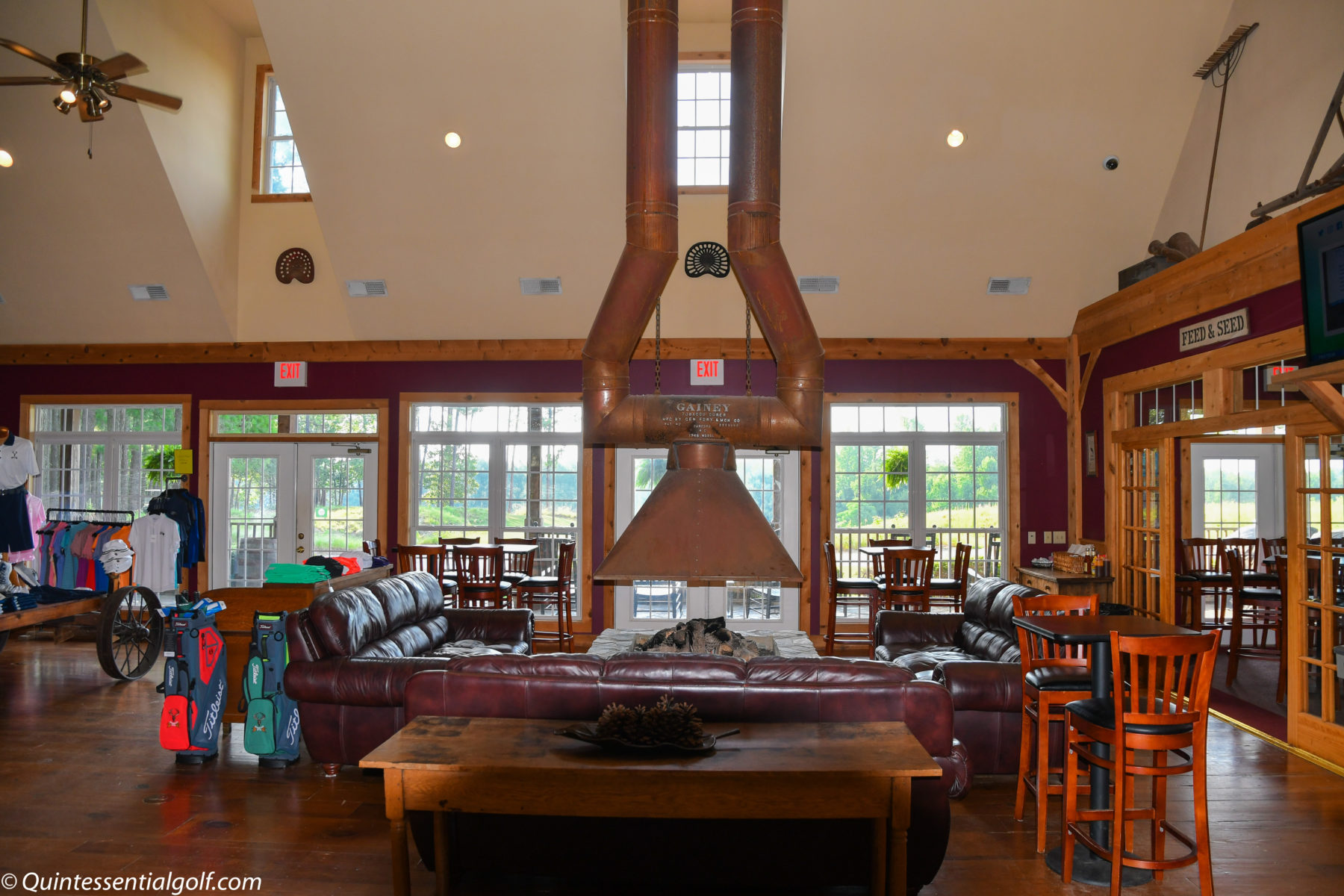
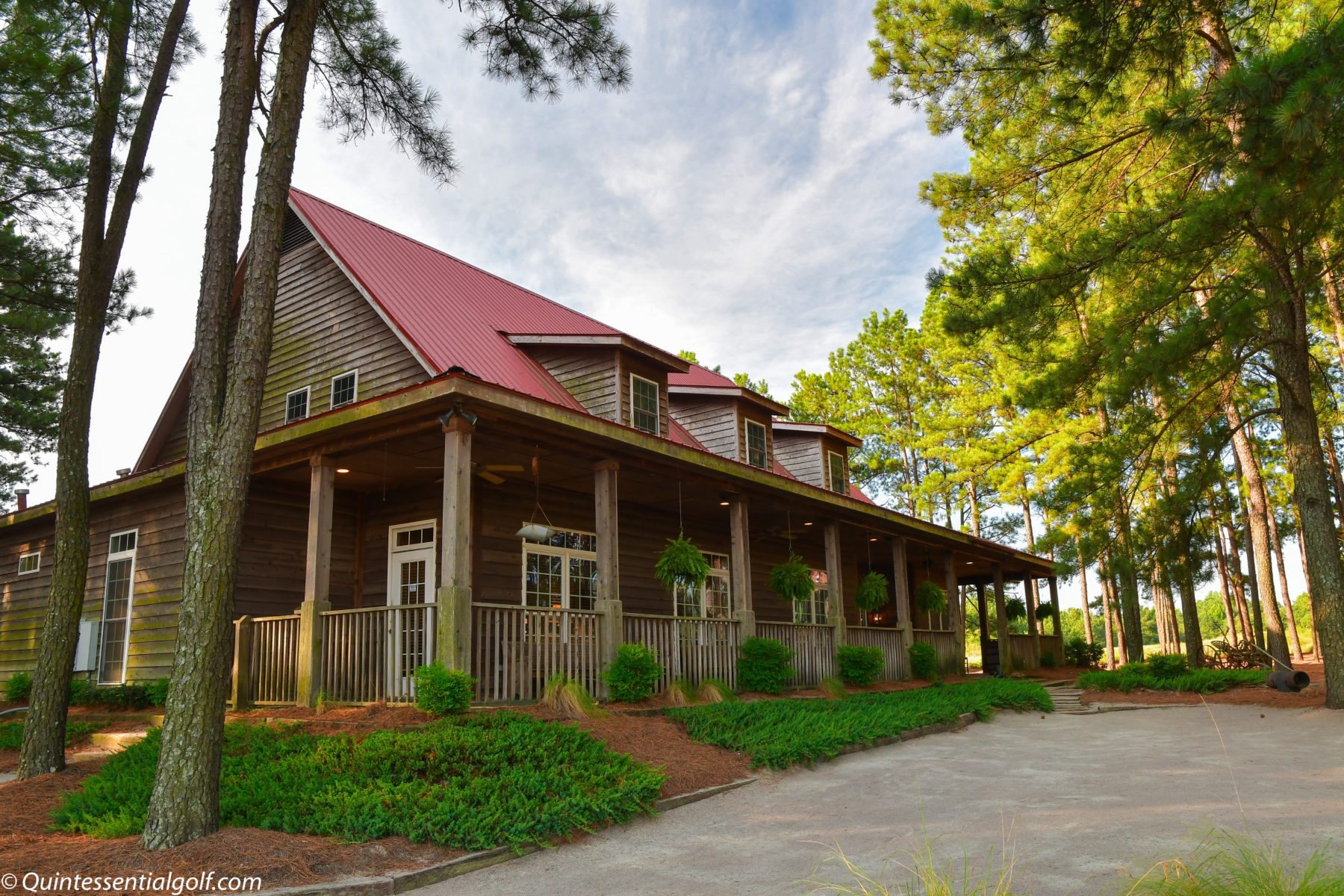
I’m a high-70s golfer. Tobacco Road fits that kind of game. You drive the back roads to Sanford, North Carolina, park on gravel, and walk into a small, farmhouse-style clubhouse. It’s simple and warm—wood, old tools on the walls, coffee on. Then you step outside and the contrast hits: the course is spotless. Tight stripes. Flat tees. Clean edges. Greens that roll like they look. It sits out in the Sandhills not far from Pinehurst, but it feels on its own. Remote feel and rustic trim, but the golf surface is dialed.
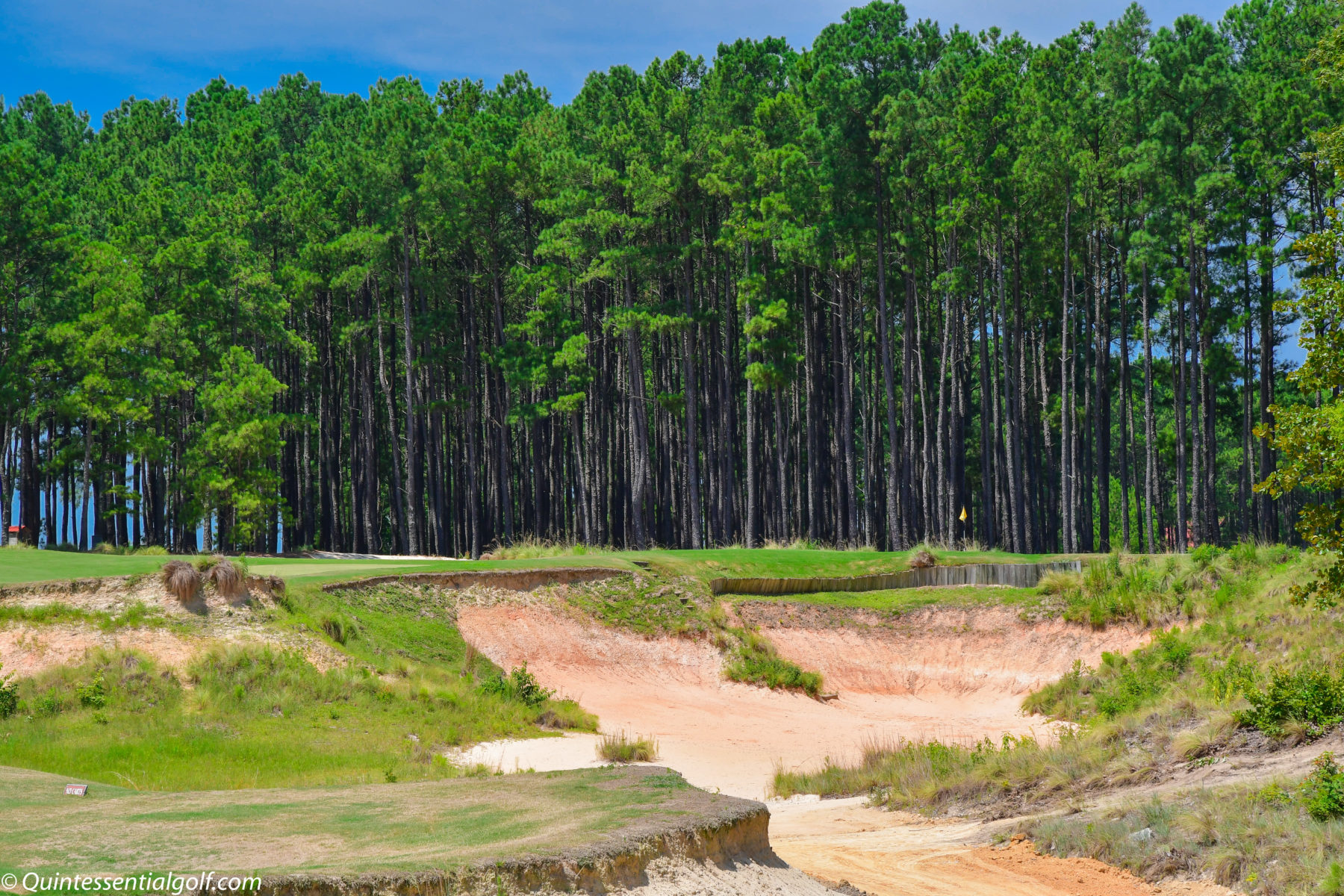
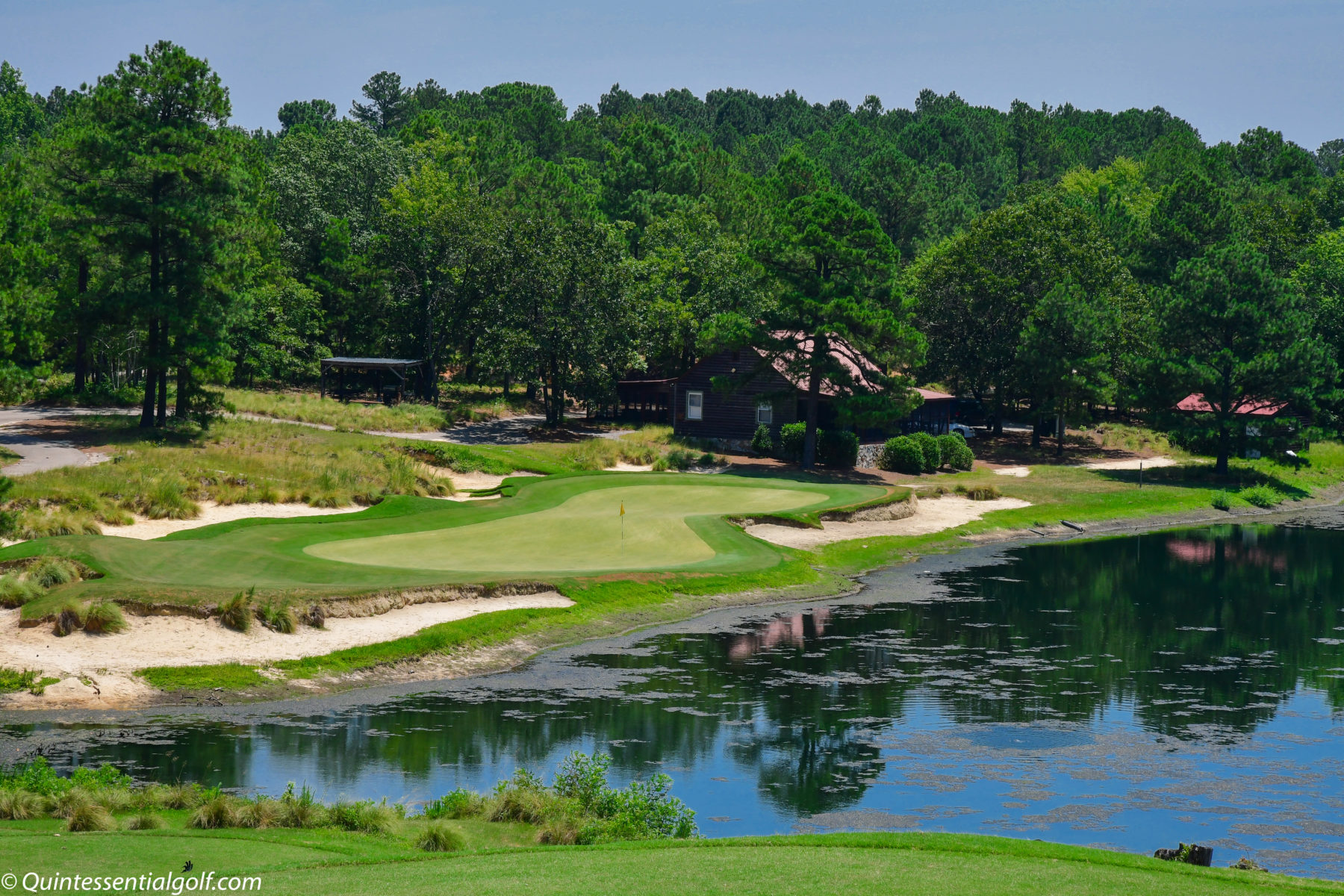
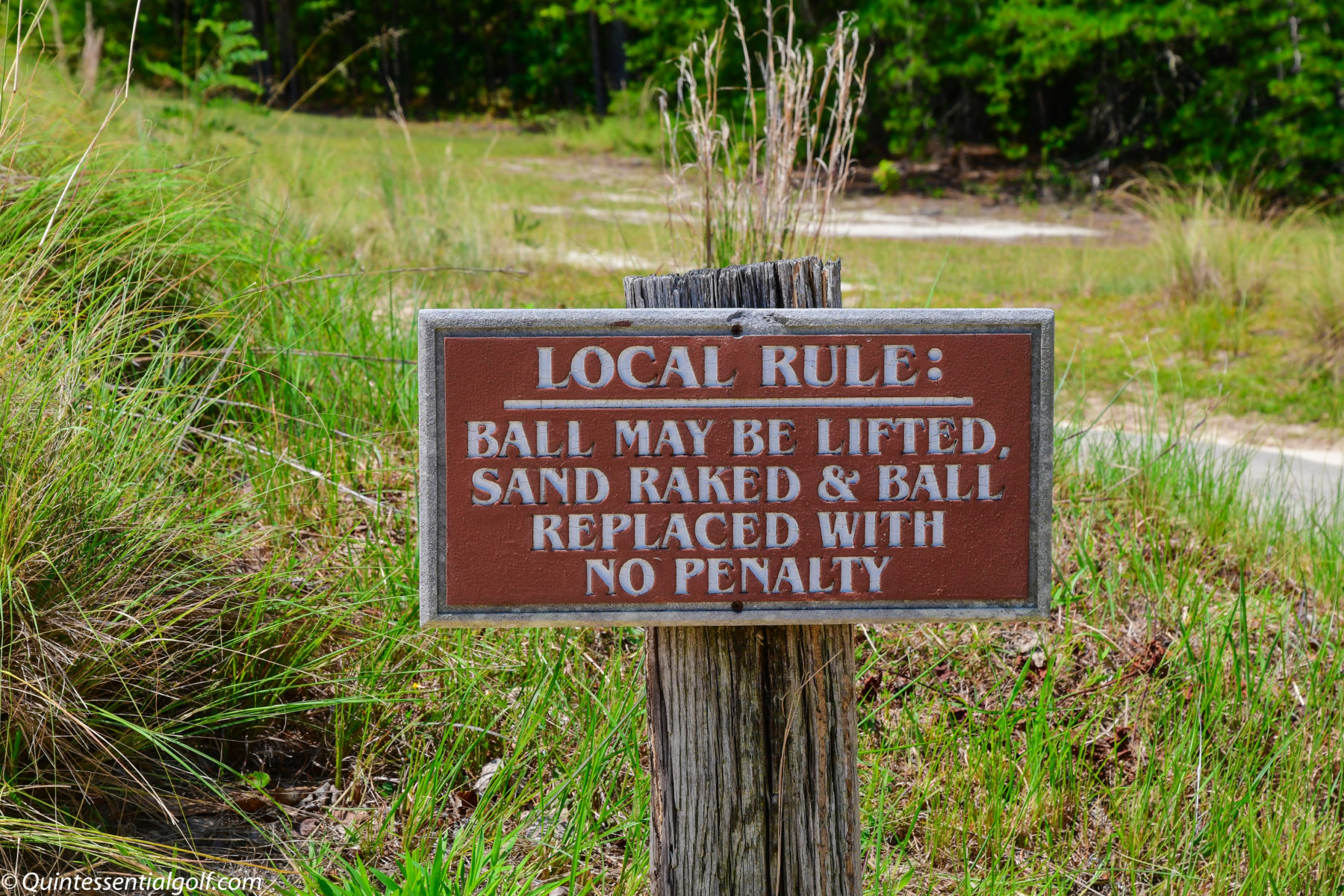
Mike Strantz built this place out of a tobacco farm and an old sand quarry. You can still see the bones—big sand ridges, wide cuts, love grass on the banks—but it’s all kept neat. Most of that sand is “waste,” not a formal bunker, so you can ground the club and take a practice swing. It looks wild and plays fair if you pick good lines and keep the swing compact.
Even the tees keep it plainspoken: Ripper, Plow, Disc instead of colors. That tells you the mood. There are blind shots. There are fairways that look tighter than they are. Angles matter more than power. The wind isn’t coastal, but it moves enough across the sand to make you pick start lines and windows.
My plan here is simple: find the stripe, aim for the safe half of the green, two putts. If I miss, I use the short grass around the green, take the easy up-and-down, and move on. A tidy 78 or 79 is there if I don’t get greedy.
Two holes stick with me.
Hole #1: right away you have to choose. Two enormous mounds form a gate in front of the tee. You can send a very straight, low ball through the opening, or try to fly it over to the blind fairway. Into the wind, the ground route works—3-wood that lands before the throat and runs through. Downwind, the high line is on: pick a window above the mounds, commit, and trust there’s plenty of short grass waiting. Past the gap the layup area widens, but the look stays tight, and the green is guarded by bunkers on the right, so favor the left half and take your two-putt.
Through the middle, the course keeps asking for placement. Par 4s bend around sand and play to platforms that reward the correct side more than the perfect number. Par 5s tease you with room off the tee, then make you think hard about the second. Tight aprons let you choose the tool—putter, bump, or a little loft. The look can be fierce, but the conditioning is so steady you can trust the first hop and the roll. That knocks the noise out of your head.
Hole #18: the finish looks straightforward and isn’t. The tee shot is a carry over a big waste area to a fairway you don’t fully see. Some days you wait for the bell, then swing when you hear the ding. Find the stripe and you’ll have a clear yardage in. The approach crosses a narrow neck pinched by sand before the green opens up. Miss left and a collection area leaves a touchy chip back up the slope. Miss right and you’re pitching from sand with the dunes holding you in. Keep the flight down, land it on your number, and take the steady two-putt.
The once hidden loop, El Camino, is a nine-hole 994-yard short course created for the experience. The original tee locations marked only by memory of the select few who knew the way. Staff members, and regulars to The Road, were among the first groups to define the routing.
After the round, the porch is the place. You can see the sand cuts and love grass glowing in late light, with the clubhouse sitting quiet behind you. The talk is about lines, bells, pins, and bounces—not totals. Tobacco Road feels remote and rustic where it meets the world and perfectly kept where the golf lives. For a high-70s golfer who plays the ball first and the course second, it’s a good match. Make a plan, trust it, and walk it in. It makes you want a replay, not a rematch.
Explore other Southeast golf course profiles from Quintessential Golf Magazine.