Cooperstown, New York, is one of those small American towns whose reputation is considerably larger than the town itself. It is, of course, the home of the National Baseball Hall of Fame and Museum, and baseball is the reason most visitors find their way to this village in upstate New York.
For passionate golfers, however, there is another piece of sporting history sitting along the western shore of Otesaga Lake.
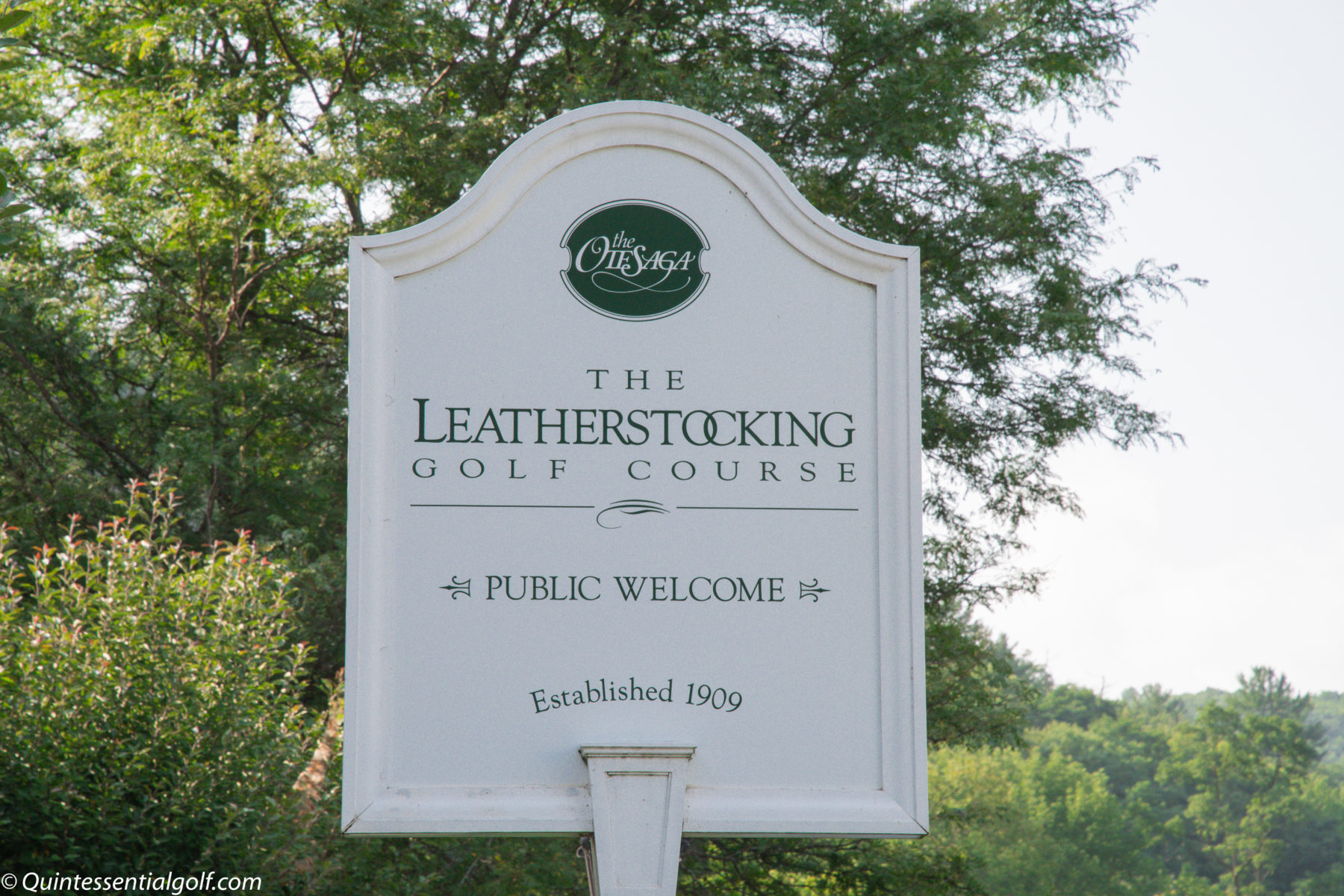
Leatherstocking Golf Course is part of The Otesaga Resort Hotel, a grand old resort built by the Clark family in 1909. The family still owns the property today, more than a century later.
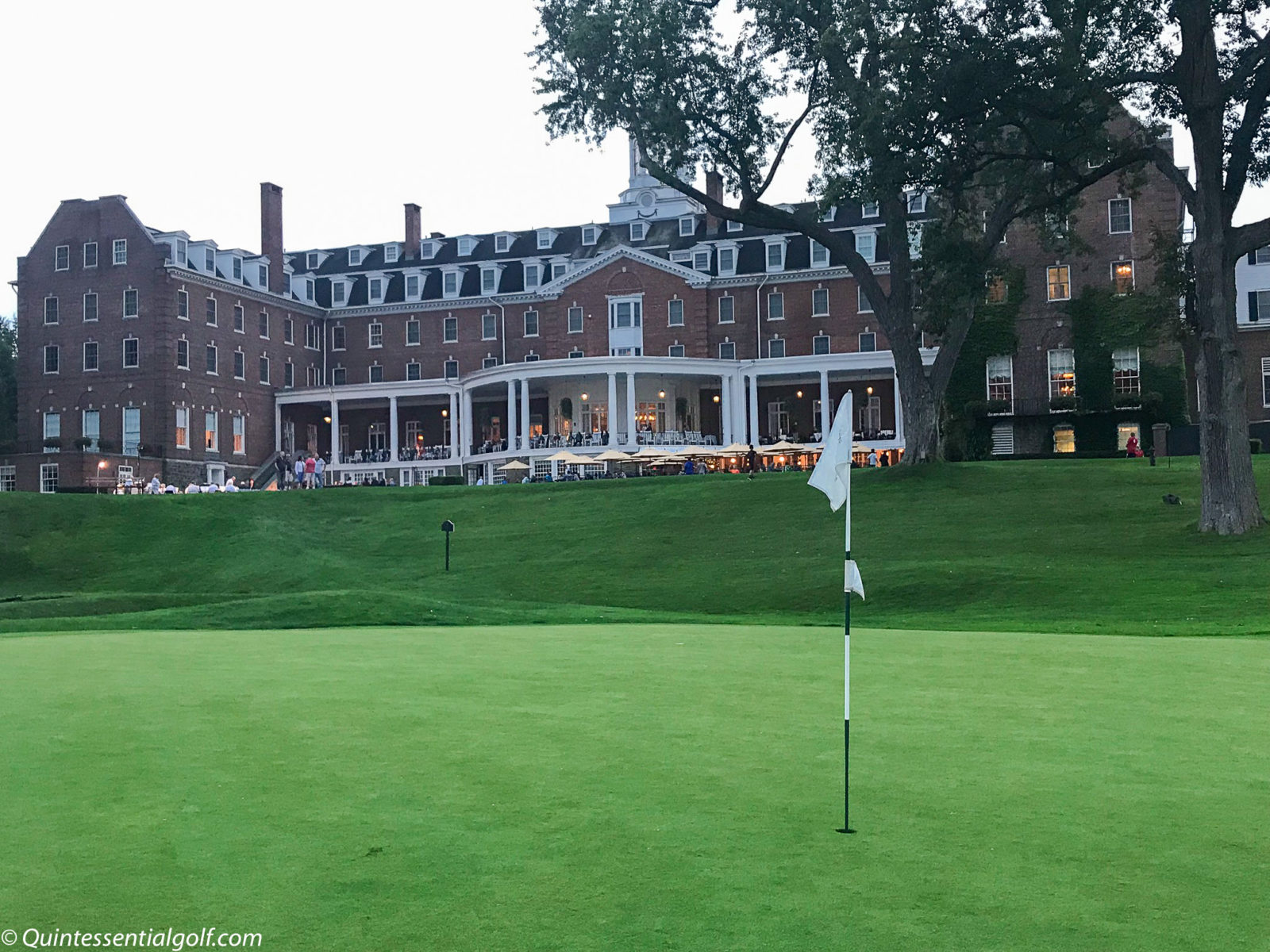
The Otesaga dominates the southern end of the lake. Over 400 windows wrap around the hotel, many looking directly across the water. Wide verandas, expansive lawns, and outdoor dining overlooking the golf course give the place the atmosphere of the great American summer resorts of another era. The Otesaga is also recognized by Historic Hotels of America.
It’s an impressive place, and admittedly an expensive one.
But the setting is special.
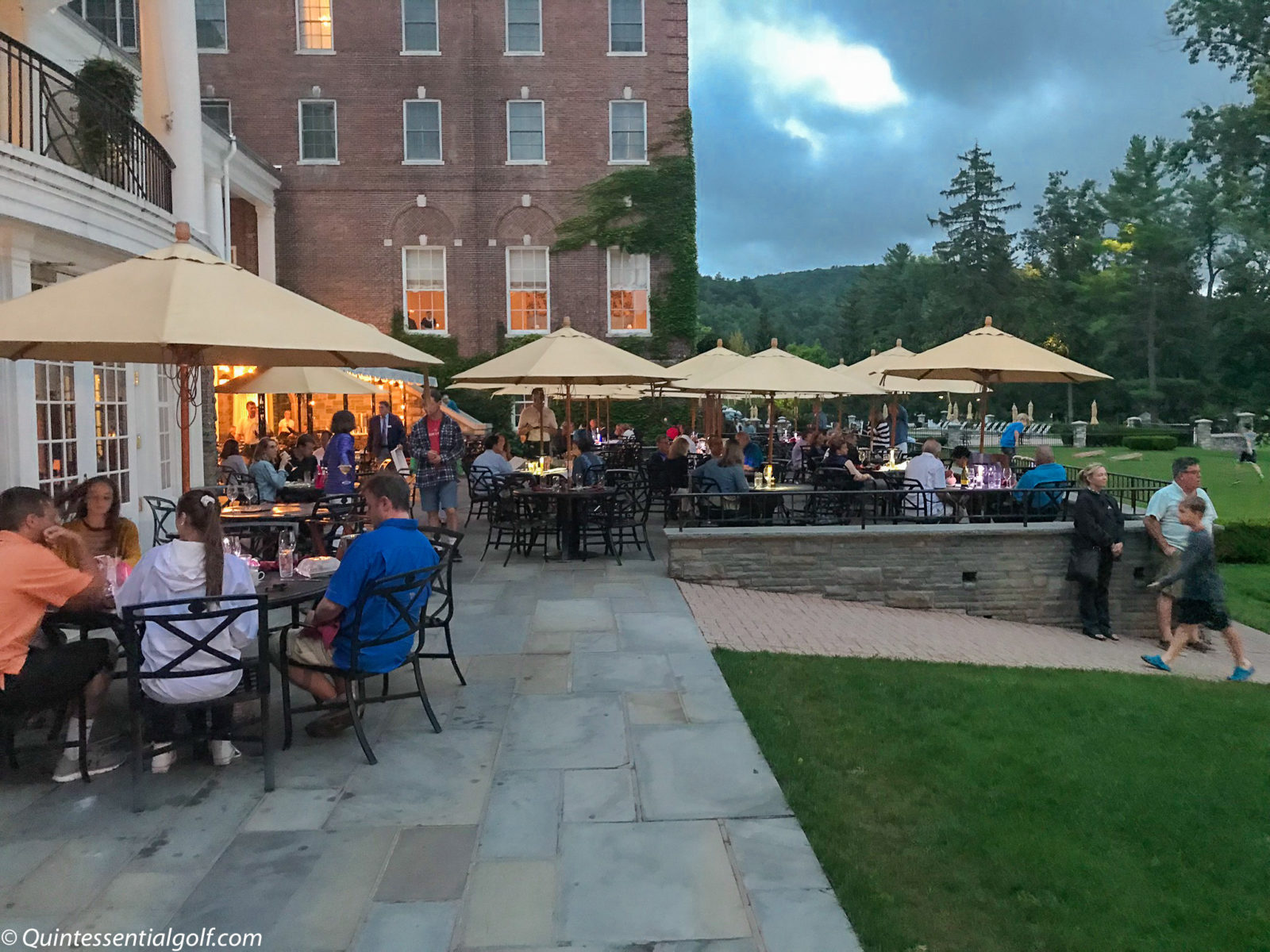
The hotel’s outdoor restaurant and firepit overlook the 18th green and Otesaga Lake beyond. On a summer evening, people linger over dinner and drinks while golfers play their final shots immediately below them.
Golf has been part of this setting for a very long time.
Leatherstocking’s Clubhouse
Before getting to the golf course itself, the clubhouse deserves some attention.
It was one of the things about Leatherstocking that stayed with me.
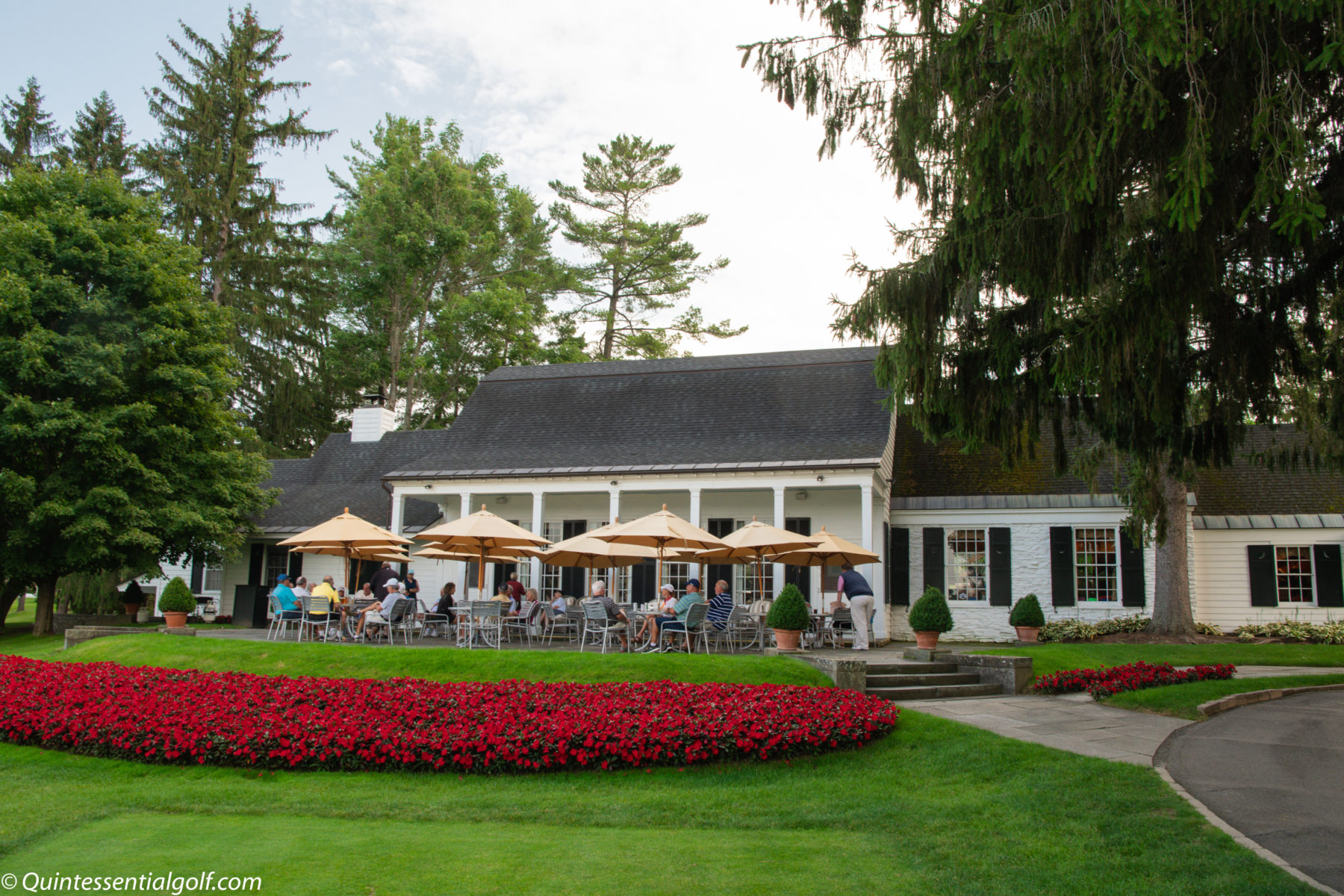
White siding, green shutters, and a steep pointed roof make it look like the clubhouse you might imagine finding at a traditional golf club 100 years ago. It isn’t particularly large or imposing. It simply looks right.
The outdoor dining terrace is equally appealing. Cream-colored umbrellas and large potted plants sit alongside a substantial bed of bright red flowers. Immediately on the other side is the fifth tee.
There isn’t much separation between golfers and everyone having lunch.
That creates a relaxed atmosphere that’s quite different from the enormous clubhouses at many modern golf resorts. You can finish playing, grab something to eat, and remain very much part of what’s happening on the golf course.
The clubhouse, hotel and golf course all seem to belong together.
A Devereux Emmet Design
Devereux Emmet designed Leatherstocking during the Golden Age of golf course architecture in the early 20th century. Emmet was a prolific architect, completing over 130 designs during his career.
Leatherstocking very much looks and plays like a golf course from that period.
It measures only 6,401 yards from the back tees, which immediately tells you something about the course. There was no need to design golf courses approaching 8,000 yards when Leatherstocking was created.
That doesn’t make it defenseless.
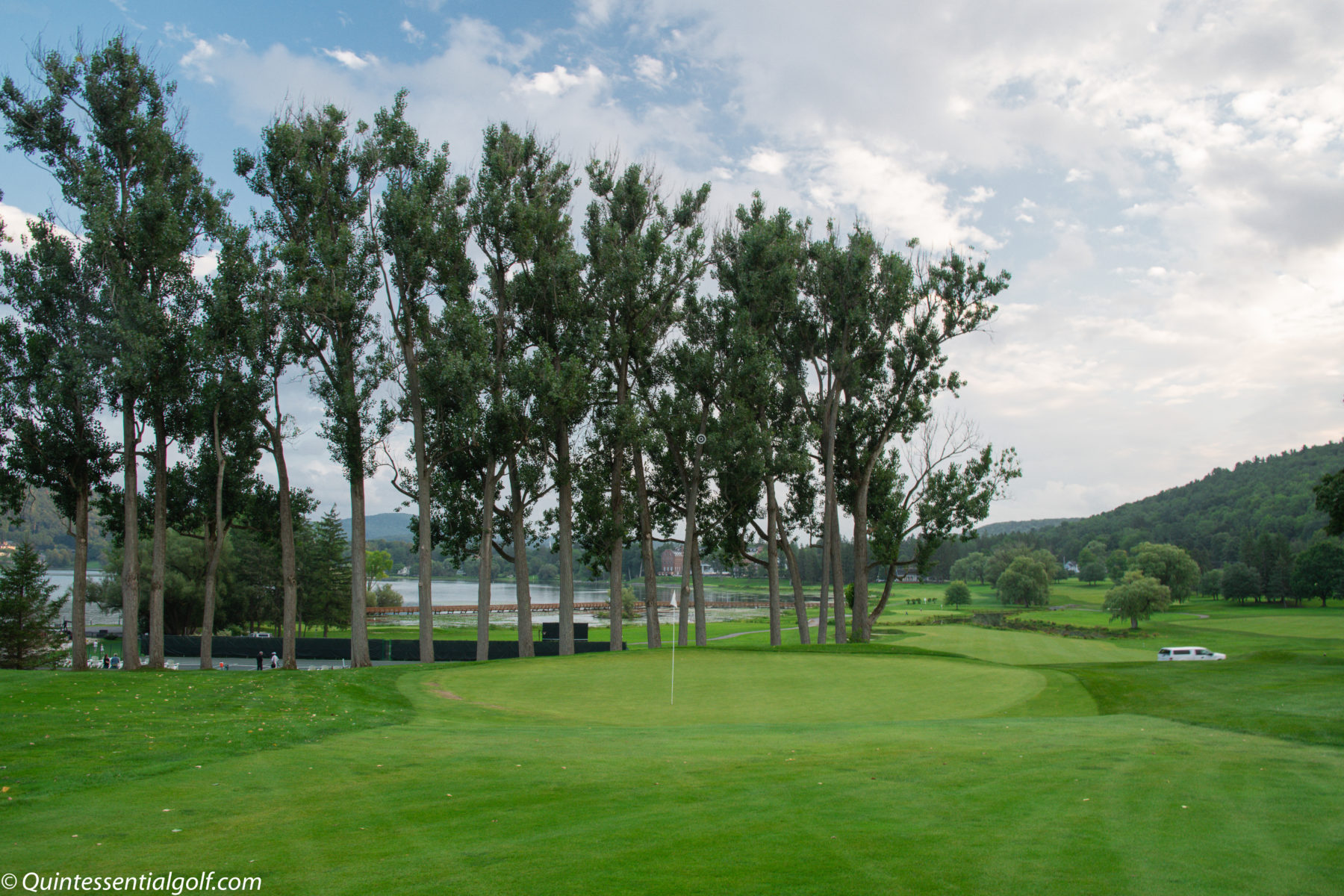
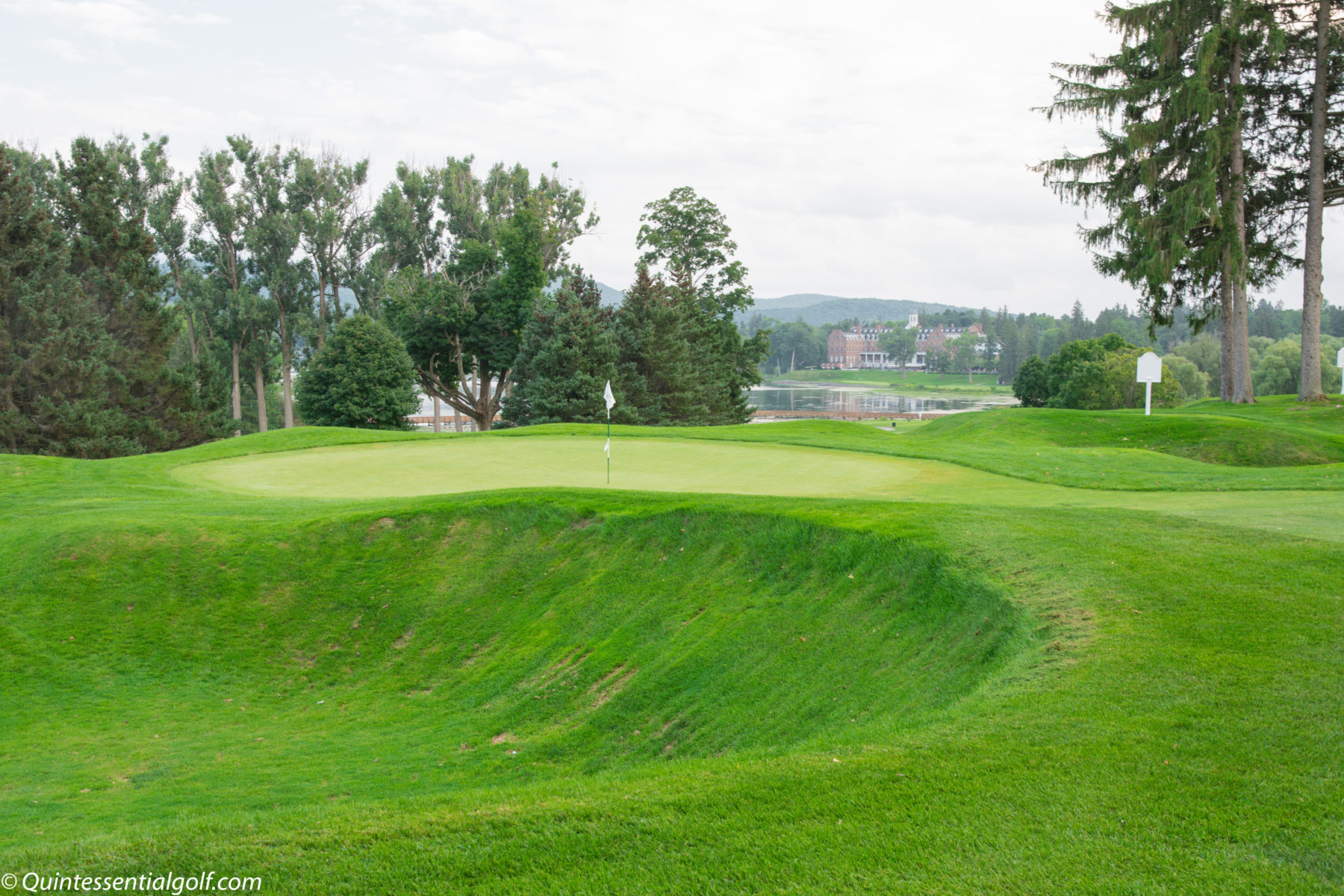
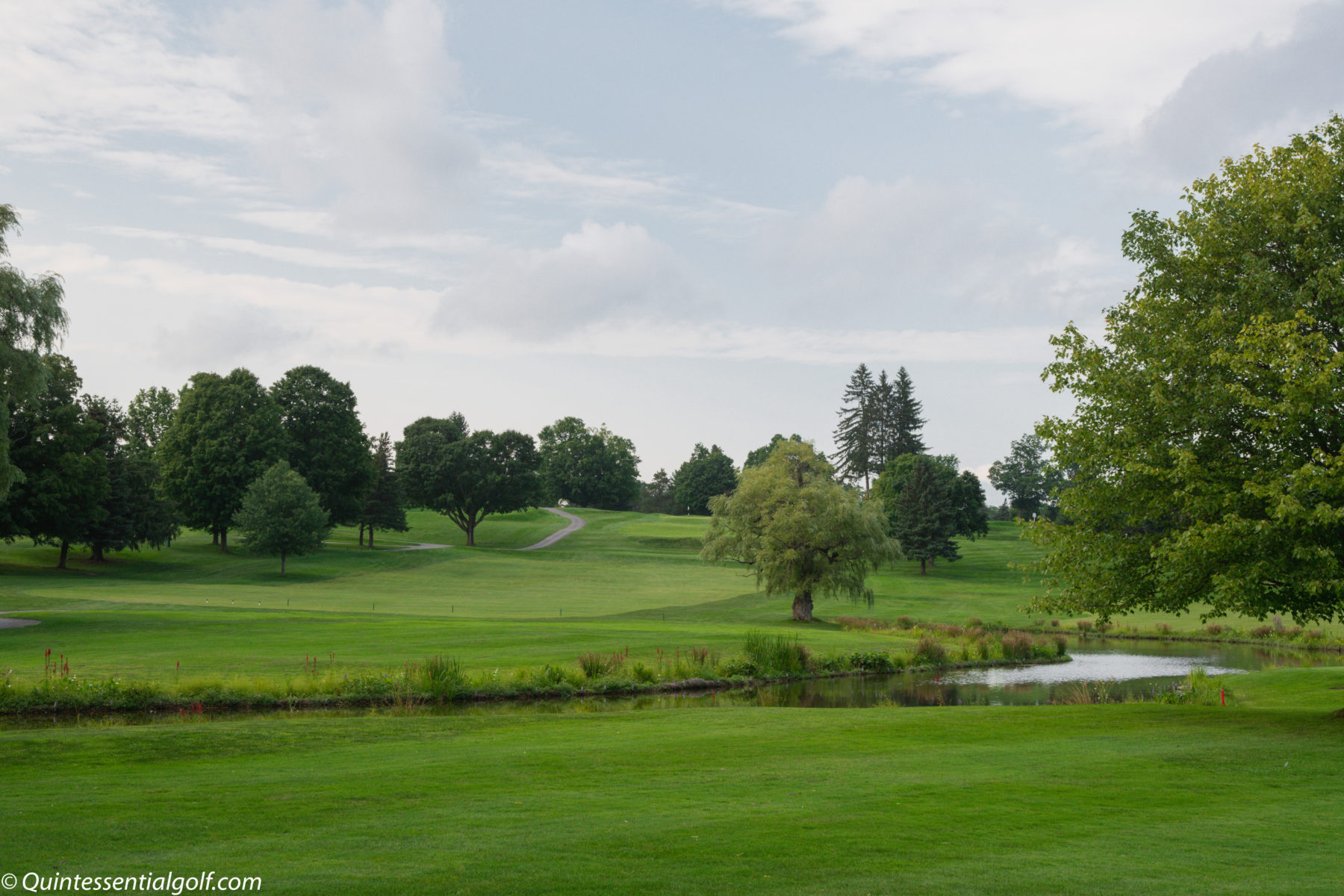
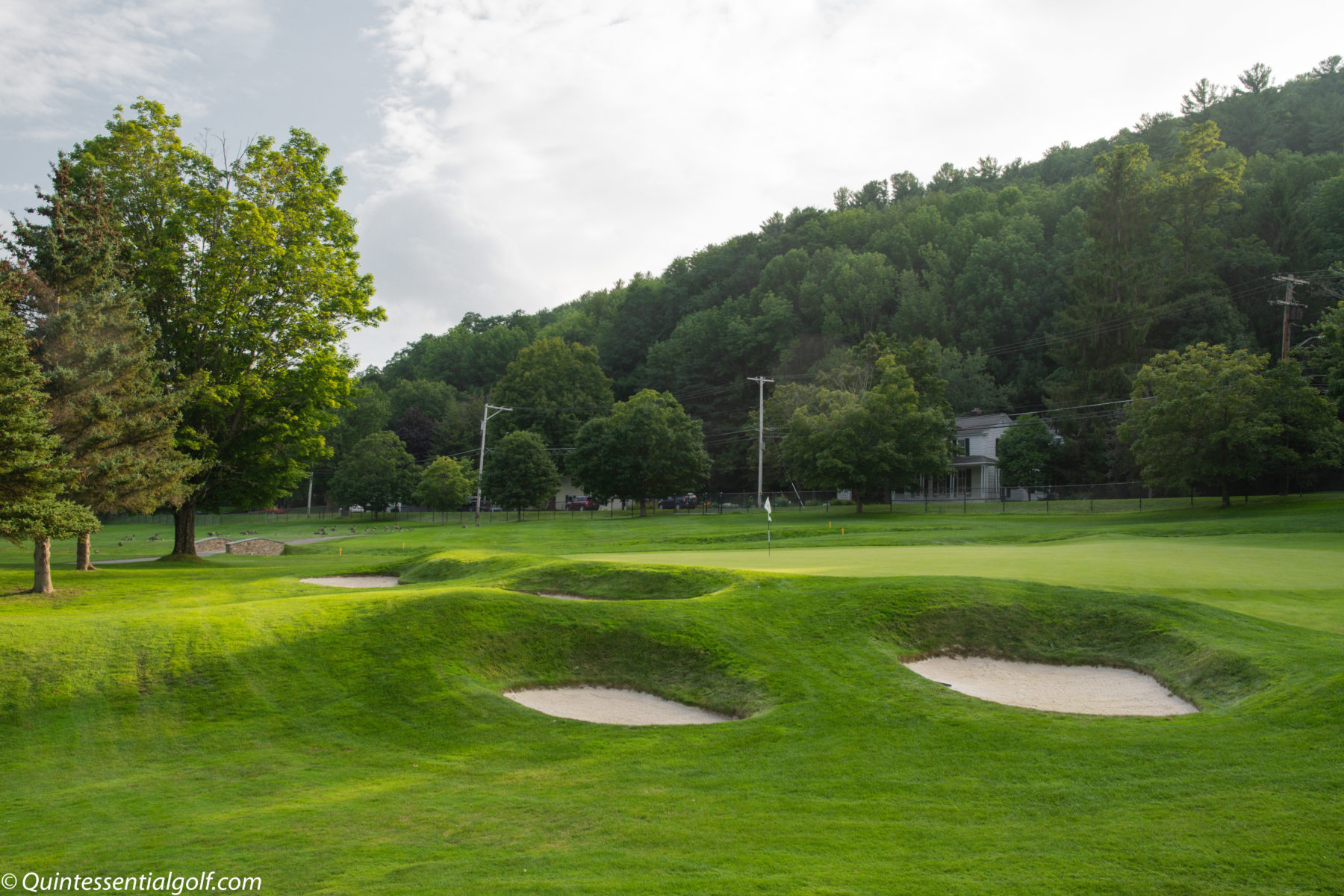
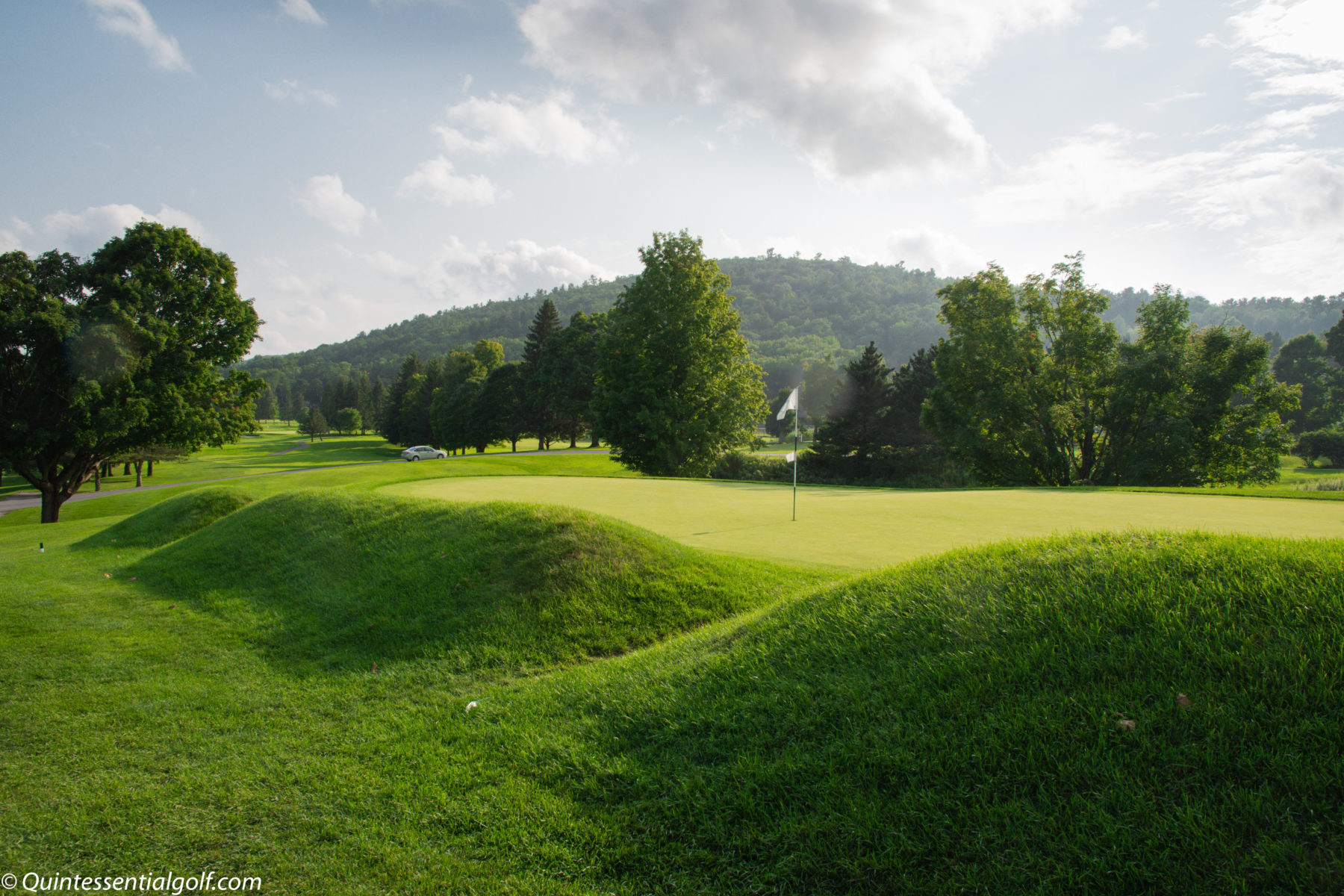
Fairways are fairly narrow. The greens are small, and plateaued greens are common. Around them you’ll find the somewhat irregular grassy mounds typical of older golf courses.
Those mounds also surround many of the bunkers. From a distance, they can disguise how far the sand sits below the surrounding ground. Walk up to your ball and occasionally you’ll discover considerably more bunker than you thought was there.
The golf course also has significant elevation changes.
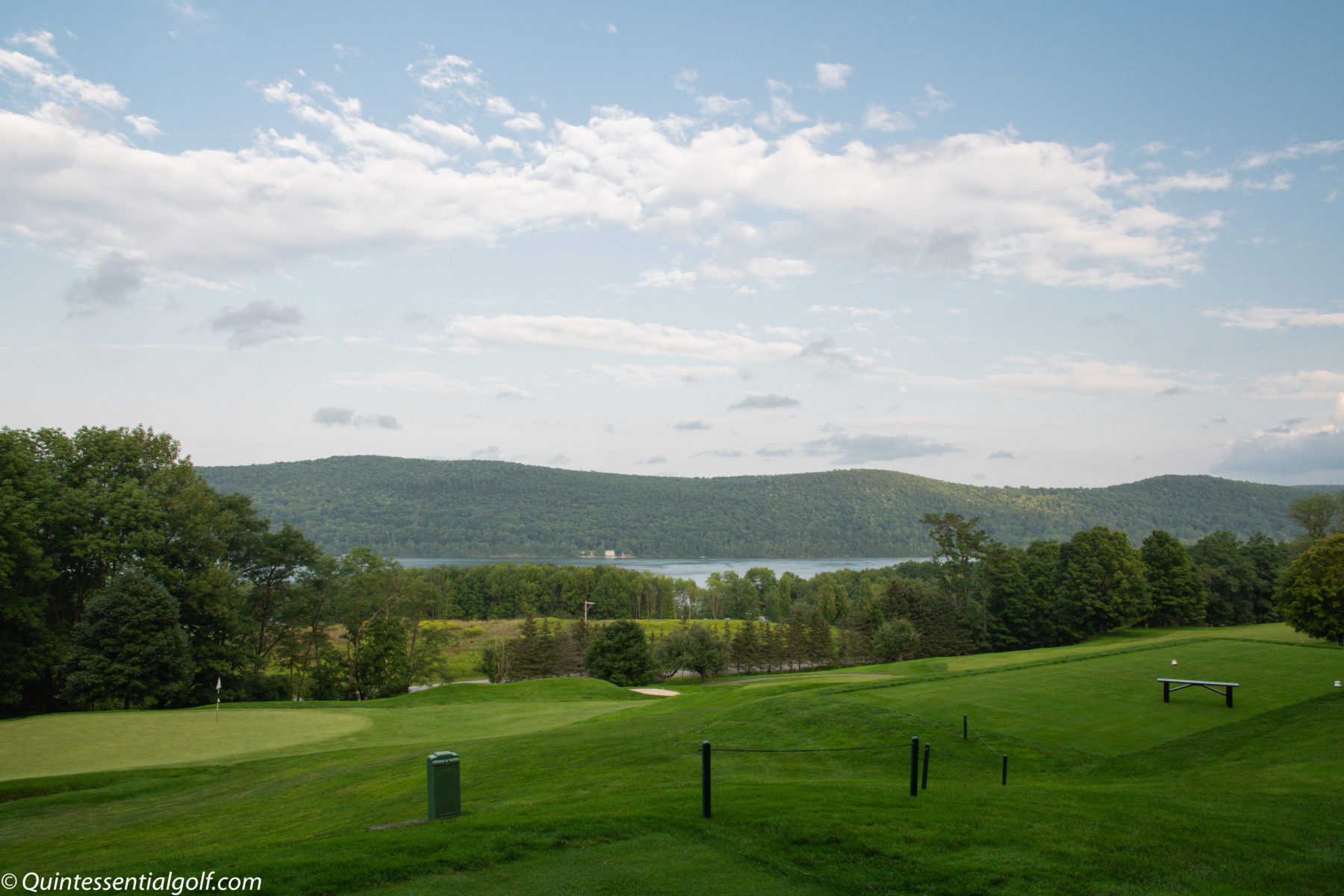
Tees are frequently elevated, and those elevations open views across Otesaga Lake and back toward the hotel. Leatherstocking uses the natural terrain rather than feeling as though the golf course was imposed upon it.
It’s an old-fashioned golf course in the best sense of the term.
Length isn’t the primary challenge. Where you put the ball matters.
And the small greens make approach shots important. Miss one in the wrong place and the resulting pitch from the surrounding mounds can quickly become more complicated than expected.
High Above Otesaga Lake
The par-5 11th takes you to the highest point on the golf course.
It’s worth looking around before pulling a club.
From the elevated tee, much of Leatherstocking unfolds below you. Otesaga Lake stretches across the landscape, and The Otesaga Hotel can be seen in the distance.
It’s one of the better views on the property and one of those moments during a round when the setting temporarily becomes more interesting than the scorecard.
That happens several times at Leatherstocking.
The lake is never very far away, and as the round progresses, the relationship between the golf course, lake and hotel becomes increasingly apparent.
The 16th
The 366-yard par-4 16th is a good example of why judging an older golf course by yardage can be misleading.
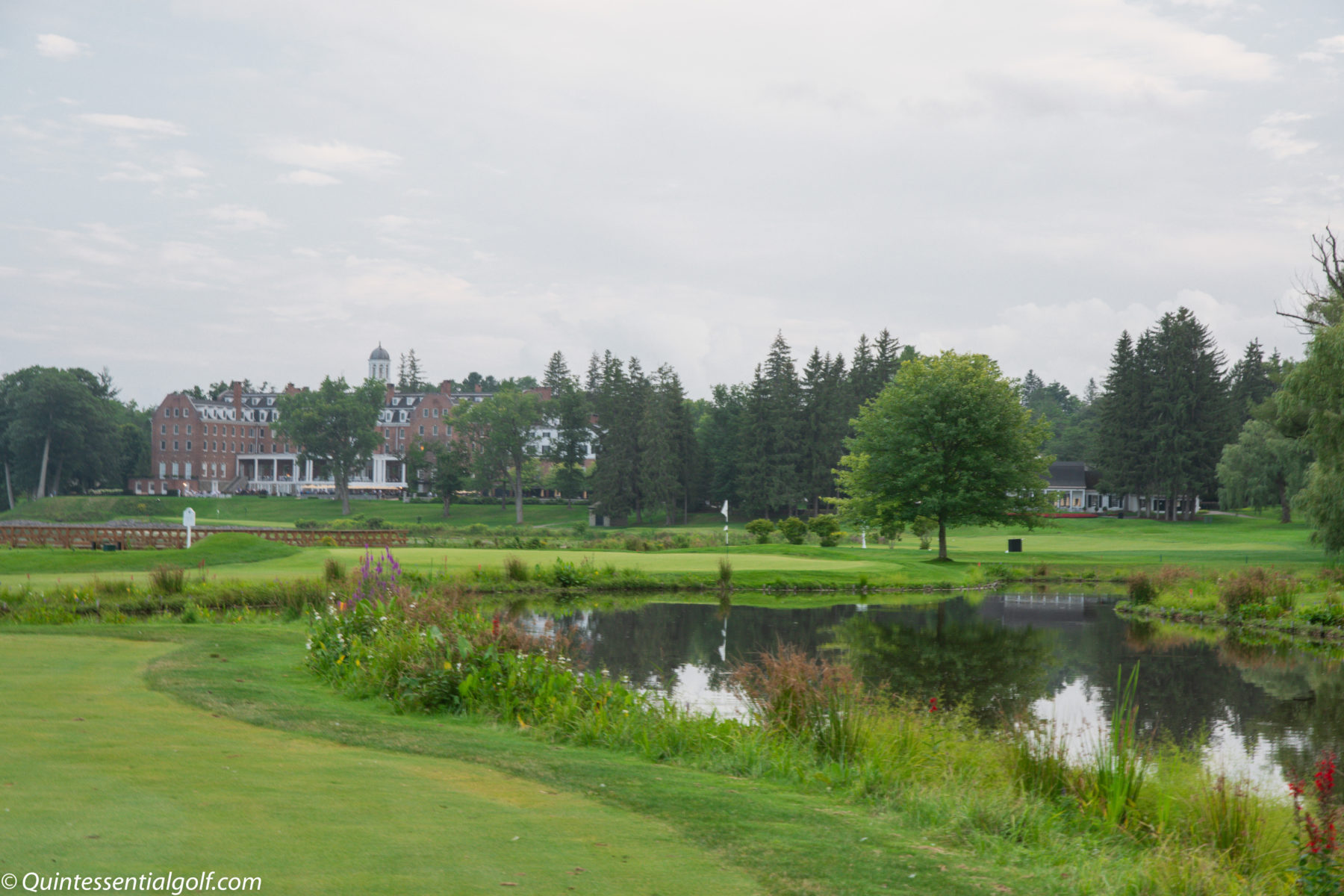
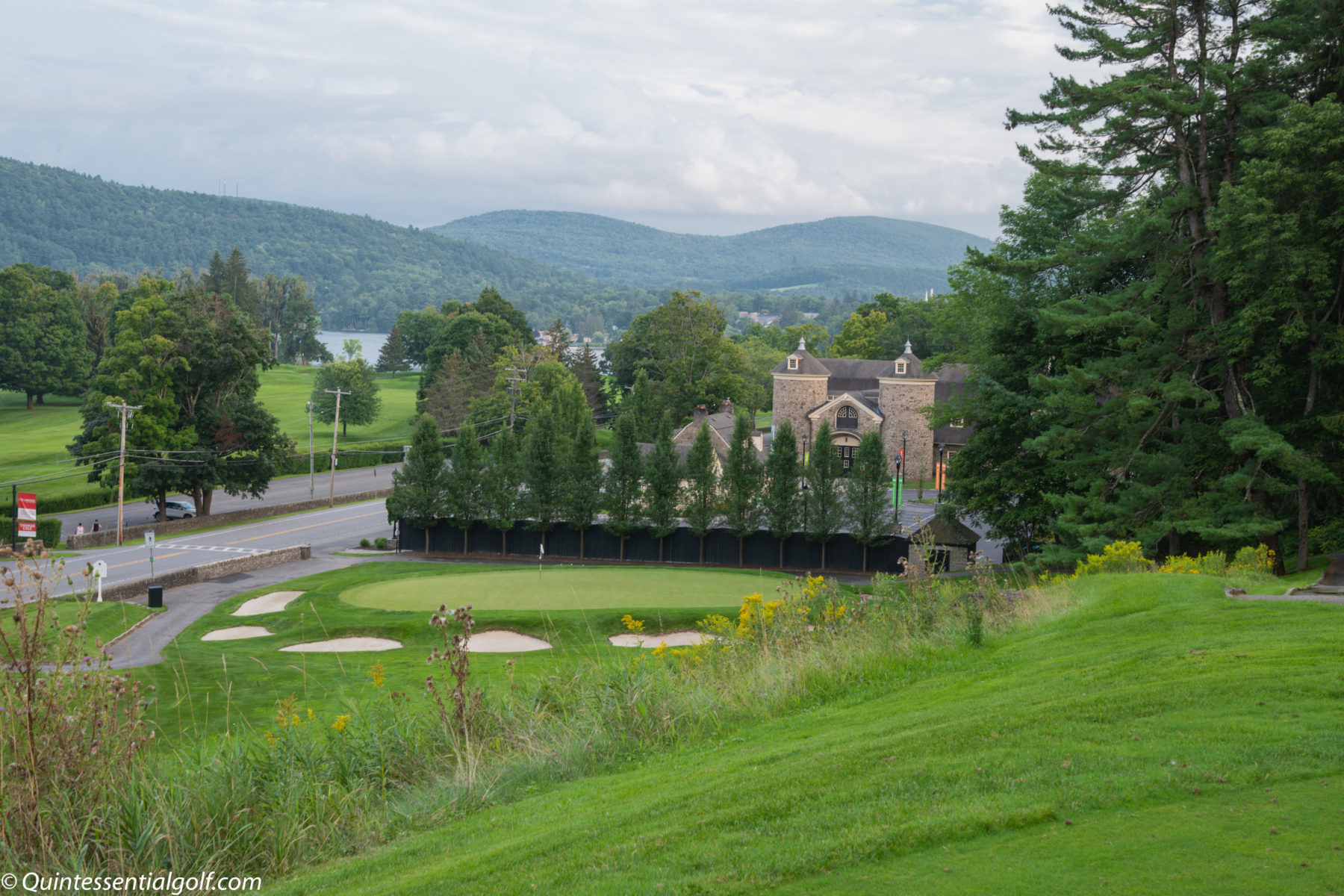
The tee shot plays substantially downhill and over a road. There are bunkers to the left and water to the right.
At 366 yards, it doesn’t sound like much on the scorecard.
But after finding the fairway, you still have an approach over water to a relatively small green. Wetlands sit beyond it, so simply taking an extra club isn’t necessarily the solution.
There isn’t a lot of room for error in either direction.
The Otesaga Hotel is prominent in the background, adding another of those scenes that you’ll probably remember longer than the number you wrote on the scorecard.
The 18th at Leatherstocking
Then there is the 18th.
The 515-yard par 5 is a sharp dogleg left and probably the hole most golfers will remember from Leatherstocking.
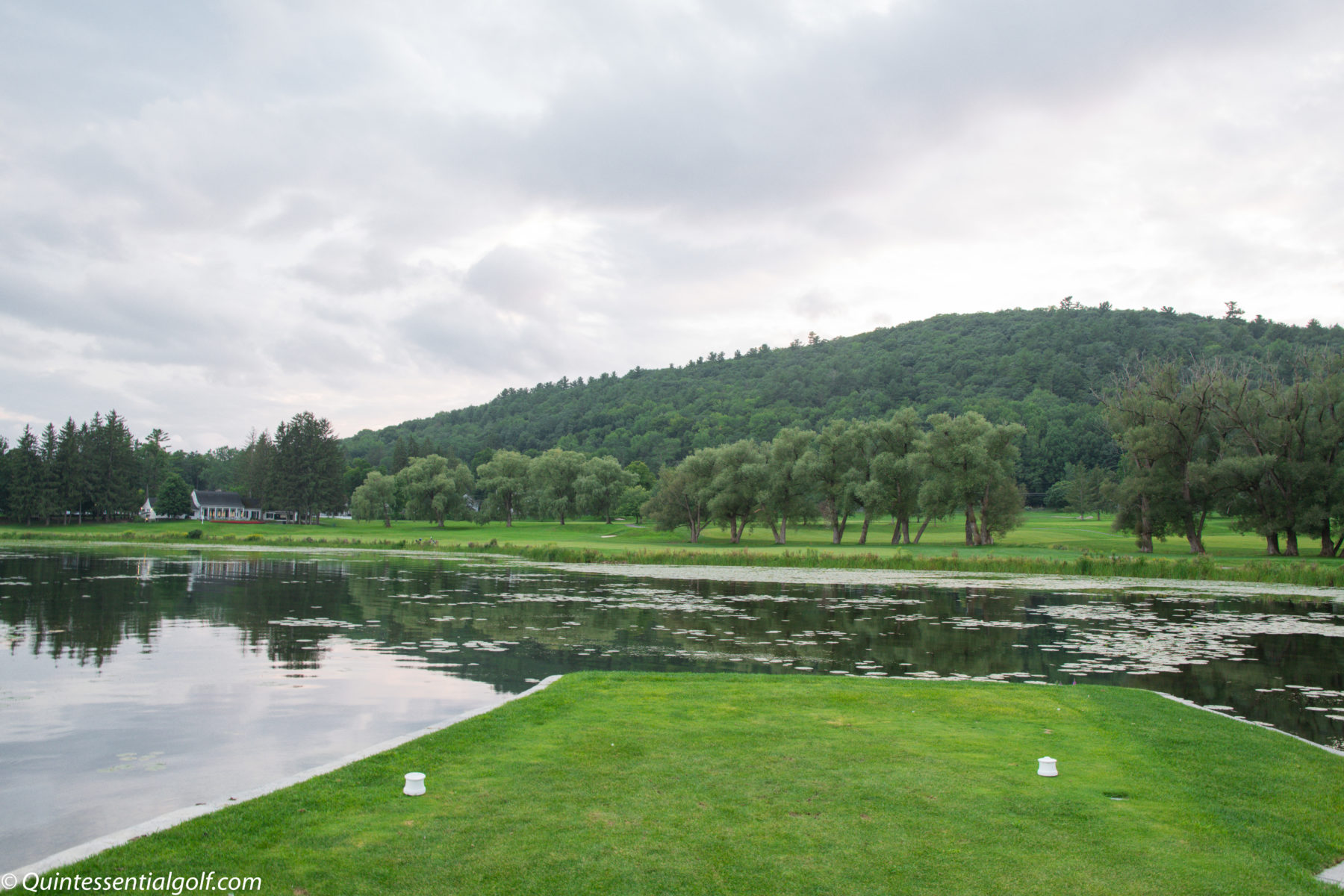
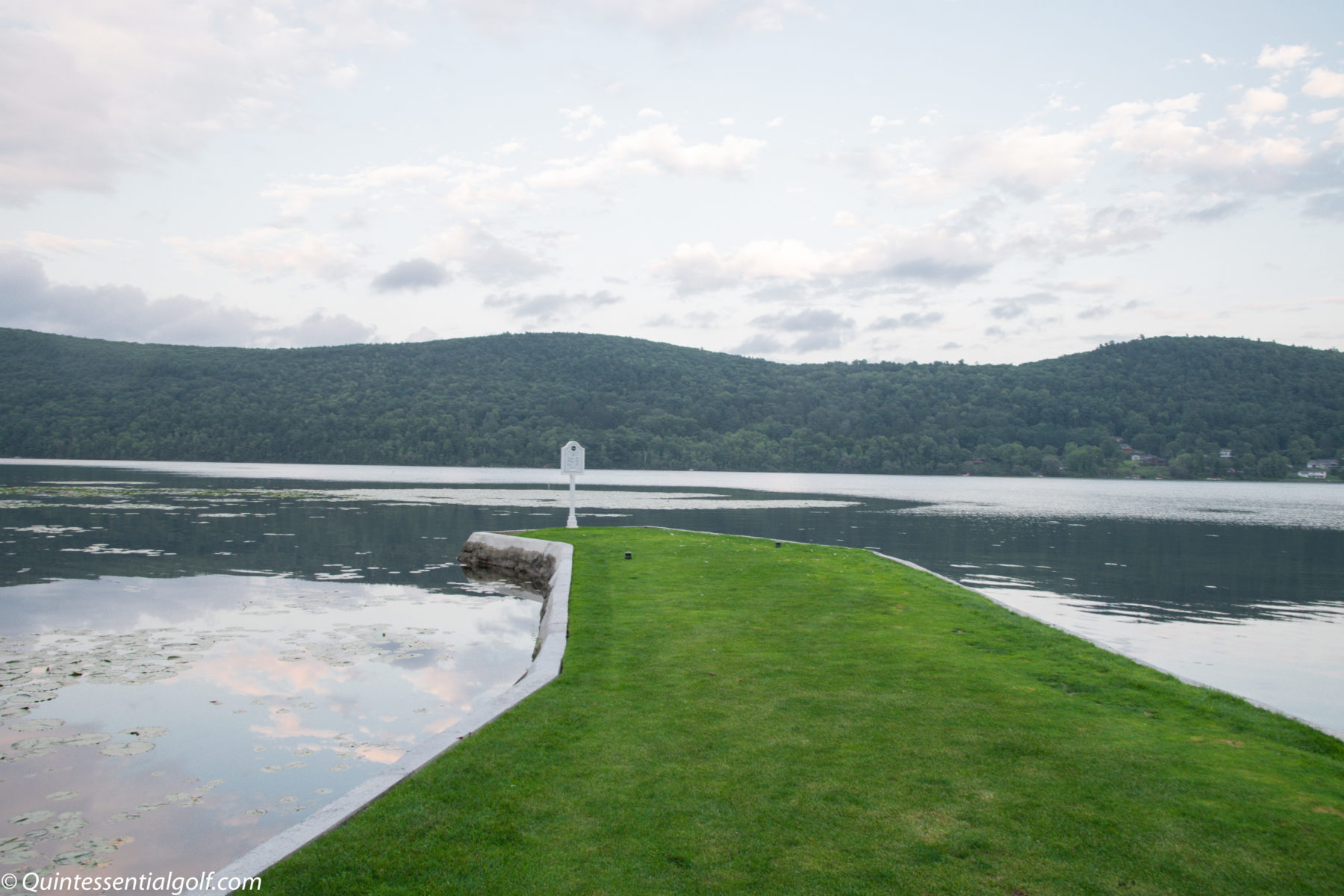
The teeing ground itself is unusual. A narrow sliver of land projects into Otesaga Lake so that water surrounds the tee on three sides.
From there, you have a decision to make.
The fairway works left around the lake, so the more water you’re prepared to carry from the tee, the more of the hole you can eliminate.
For a golfer thinking about reaching the green in two, the aggressive line is tempting.
Of course, Otesaga Lake is sitting right there, reminding you of the alternative outcome.
Take less of the lake and the tee shot becomes considerably more comfortable, but the second shot becomes correspondingly longer.
It’s a simple risk-reward proposition that requires nothing artificial to make it interesting.
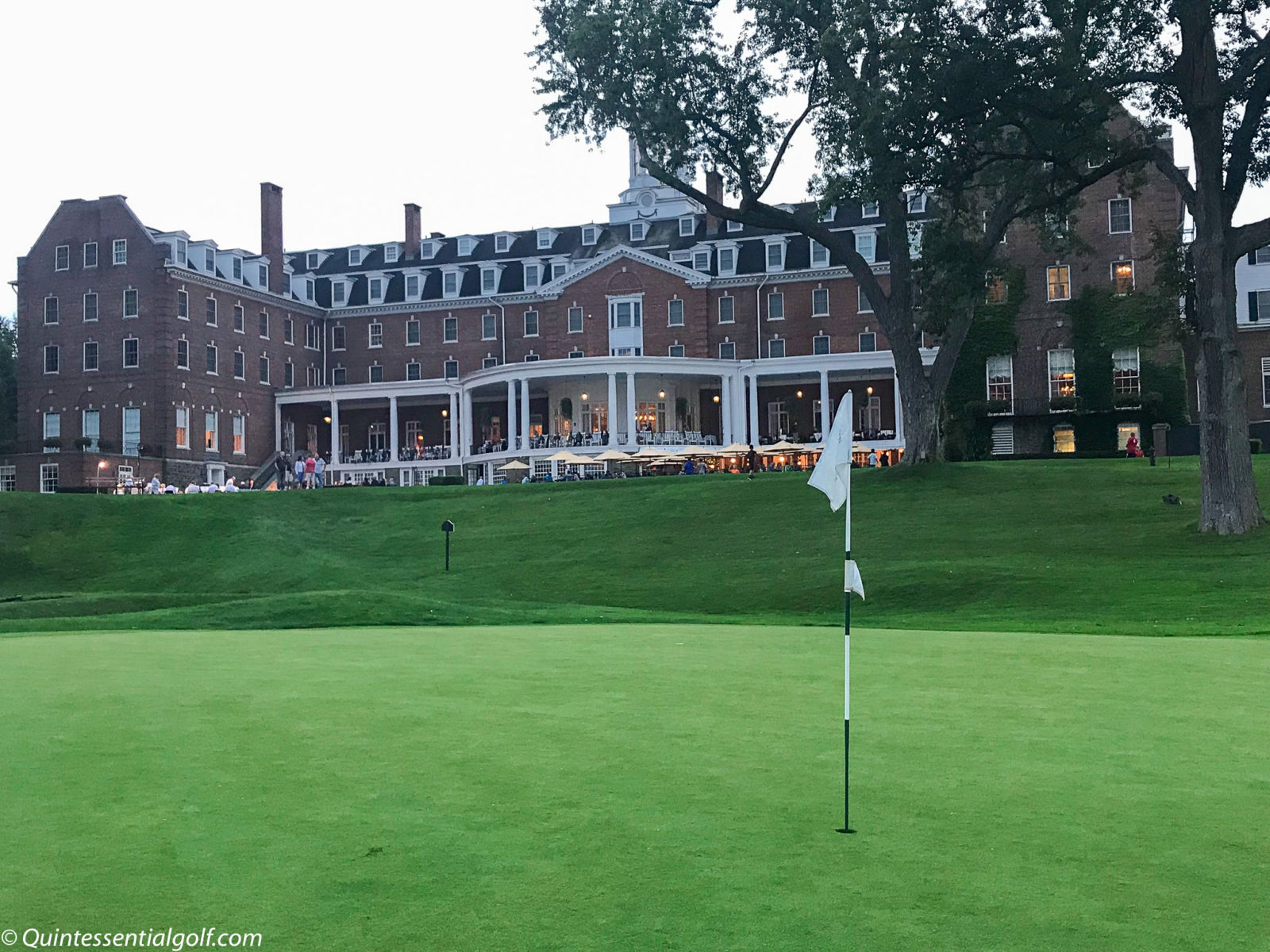
The fairway eventually narrows toward a small green sitting below The Otesaga’s outdoor restaurant and firepit.
And unlike most finishing holes, you may have an audience.
People having dinner or enjoying a drink on the patio look directly down toward the green. As you play your final approach, they’re close enough that you’re aware of them.
Make a good swing, and it’s a wonderful way to finish.
If you don’t, at least the clubhouse isn’t far away.
Golf in Cooperstown
Leatherstocking and Cooperstown make an interesting combination.
You can spend the morning at the National Baseball Hall of Fame looking at the history of Ruth, Cobb, Gehrig, Williams, Mantle and generations of players who followed them, then spend the afternoon playing a golf course from essentially the same period of American sporting history.
There is something appropriate about that.
Neither experience requires much modernization to remain interesting.
Leatherstocking isn’t memorable because it’s long, extremely difficult, or filled with spectacular modern golf holes. There are plenty of courses around the world that fit those descriptions.
What Leatherstocking has is character.
You have a Devereux Emmet golf course laid across naturally rolling terrain. Small plateau greens. Narrow fairways. Old-fashioned bunkering. Elevated tees overlooking Otesaga Lake. A classic clubhouse that looks as though it has always been there. And a grand 1909 resort hotel appearing in the background throughout the round.
Then you arrive at the 18th tee, surrounded by water, with the hotel and its outdoor terrace waiting beyond the final green.
It’s a golf experience tied specifically to its location.
That’s ultimately what makes Leatherstocking interesting for a traveling golfer.
You couldn’t pick up this golf course and move it somewhere else. Without Otesaga Lake, The Otesaga Hotel, the clubhouse and Cooperstown, it wouldn’t be Leatherstocking.
And that’s exactly why, if your travels take you to Cooperstown, bring your golf clubs.
Explore other Northeast golf course profiles from Quintessential Golf Magazine