On a visit to see friends in Durango, Colorado, we flew into Albuquerque, New Mexico, about 220 miles to the south. We knew there were relatively few memorable golf options around Durango, but some of the best golf courses in New Mexico are clustered around Albuquerque and Santa Fe, within about 90 miles of each other.
One course stood out: Paa-Ko Ridge Golf Club.
About 45 minutes northeast of Albuquerque, in the town of Sandia Park, Paa-Ko Ridge sits at elevations between 6,500 and 7,000 feet in the Sandia Mountains. It has been ranked the No. 1 golf course in New Mexico, and it’s not close. The setting alone makes it worth the trip.
Northern New Mexico differs greatly from the desert Southwest many of us picture. The elevation moderates the summer climate, with temperatures often in the upper 80s and low 90s — ten to fifteen degrees cooler than lower-elevation desert destinations such as Phoenix. The combination of mountain air, rugged scenery and relatively comfortable summer temperatures makes this an appealing place for a golf trip, and it’s clearly a popular one; the parking lot the morning we played was fuller than I expected for a Tuesday.
The Setting
Paa-Ko Ridge fits the landscape perfectly.
Architect Ken Dye — no relation to the more famous Pete Dye — worked hard to preserve the natural terrain rather than overpower it. The course moves through dramatic elevation changes, rock outcroppings, native grasses, and rugged vegetation. Piñon, cottonwood, ponderosa, and juniper trees frame many of the holes.
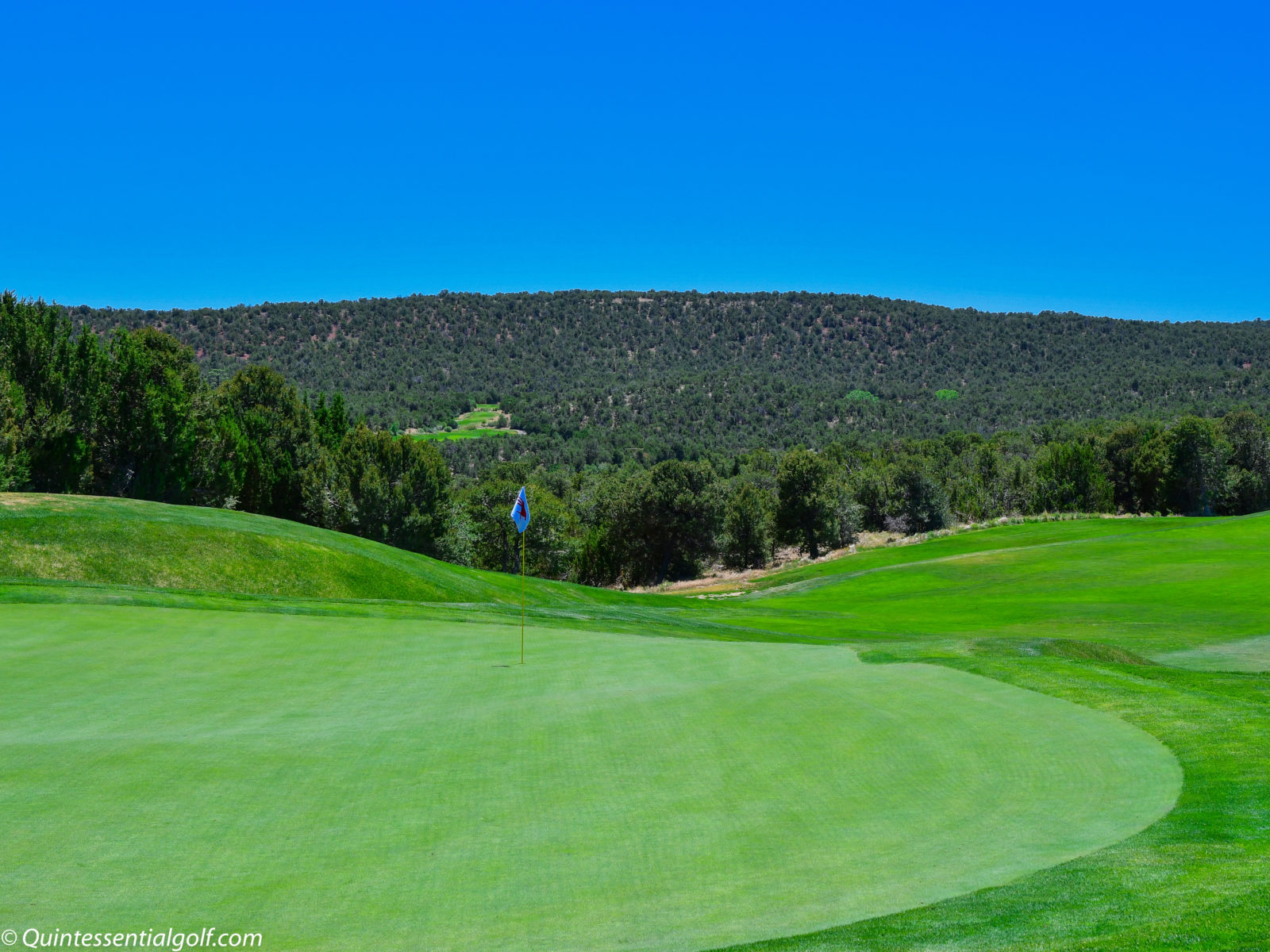
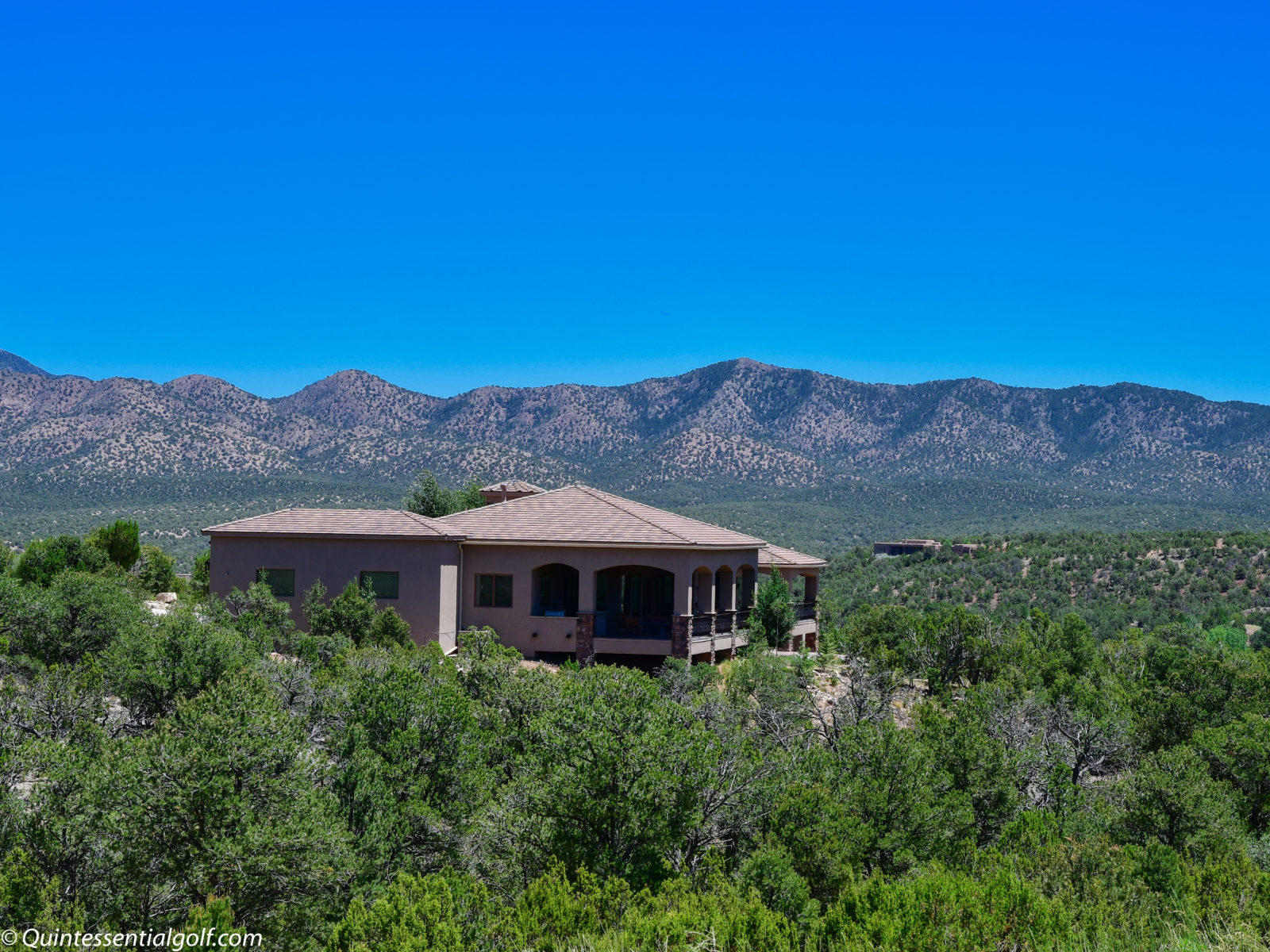
One thing I noticed immediately was what I didn’t see: houses. The golf course covers a huge amount of land, with relatively few holes running alongside one another. Instead of rooftops, you get views of five different mountain ranges rotating in and out of sight as the routing turns you through the foothills. It’s the property that makes you stop mid-swing, just to look around.
The Clubhouse and Practice Facilities
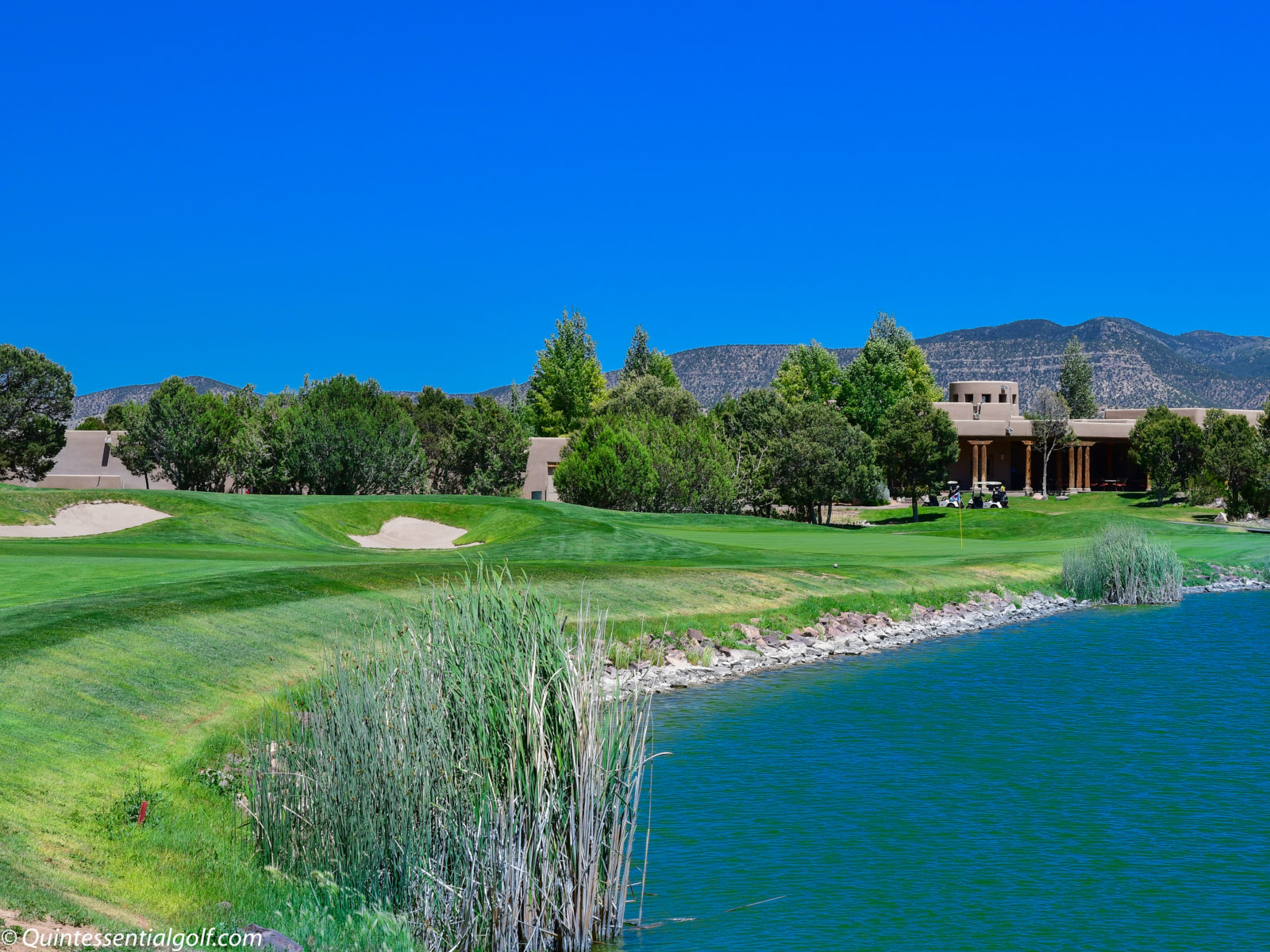
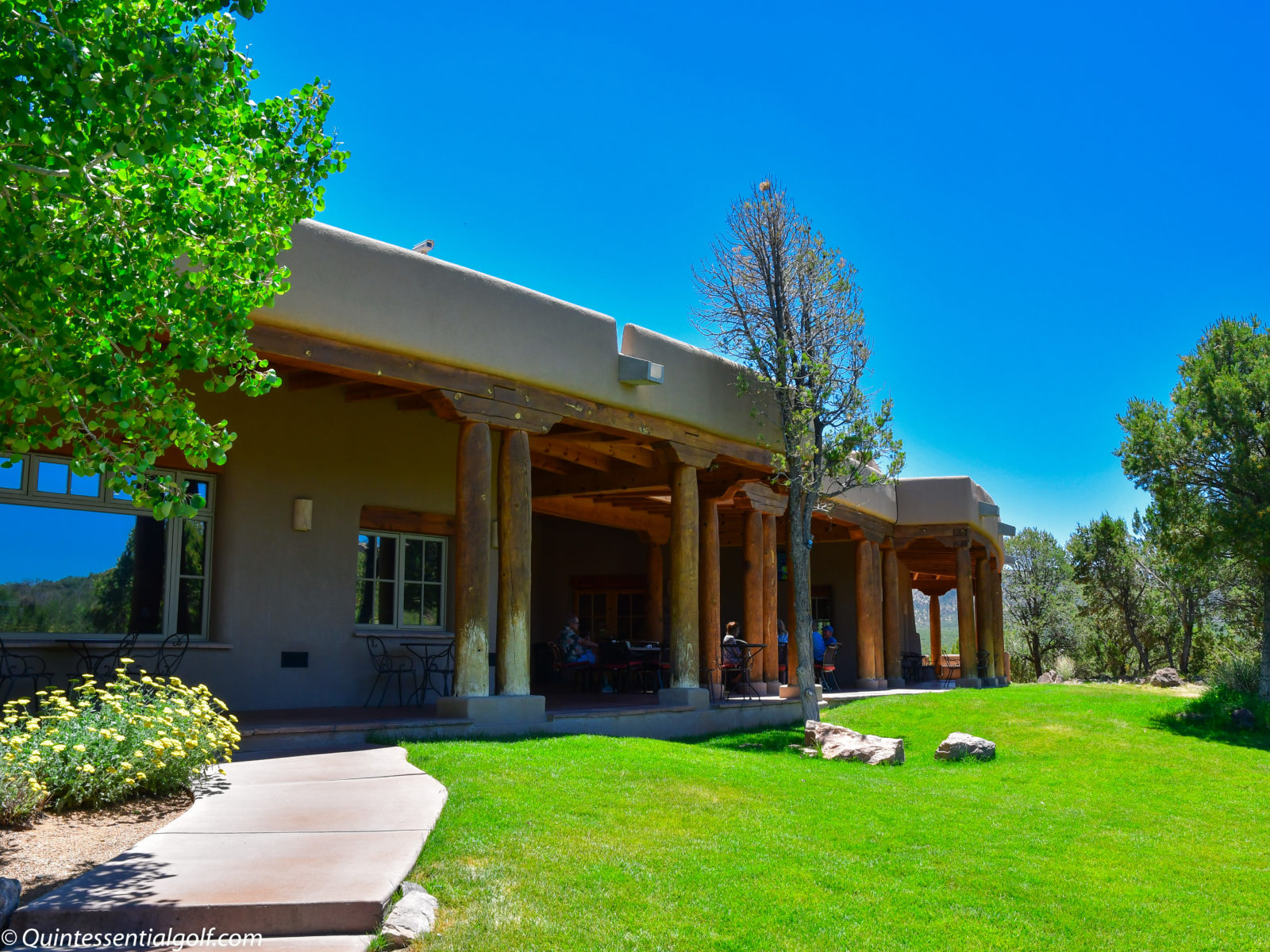
They designed the clubhouse at Paa-Ko Ridge in a Pueblo style that suits the setting, featuring thick stucco walls, timber beams, and covered porches that shield you from the sun between rounds. It doesn’t try to be a grand resort clubhouse, and that’s part of its charm; it feels like it belongs on this hillside rather than having been dropped there.
Inside, The Grille at Paa-Ko Ridge handles breakfast, lunch and casual dinner, along with a full bar, and after a round in the summer heat, a cold drink on the covered patio overlooking the mountains is exactly where you want to end up. The pro shop is well stocked without being overwhelming, and the staff we dealt with — both in the shop and on the practice range — were unhurried and happy to talk course strategy, which on a course this demanding is a real service.
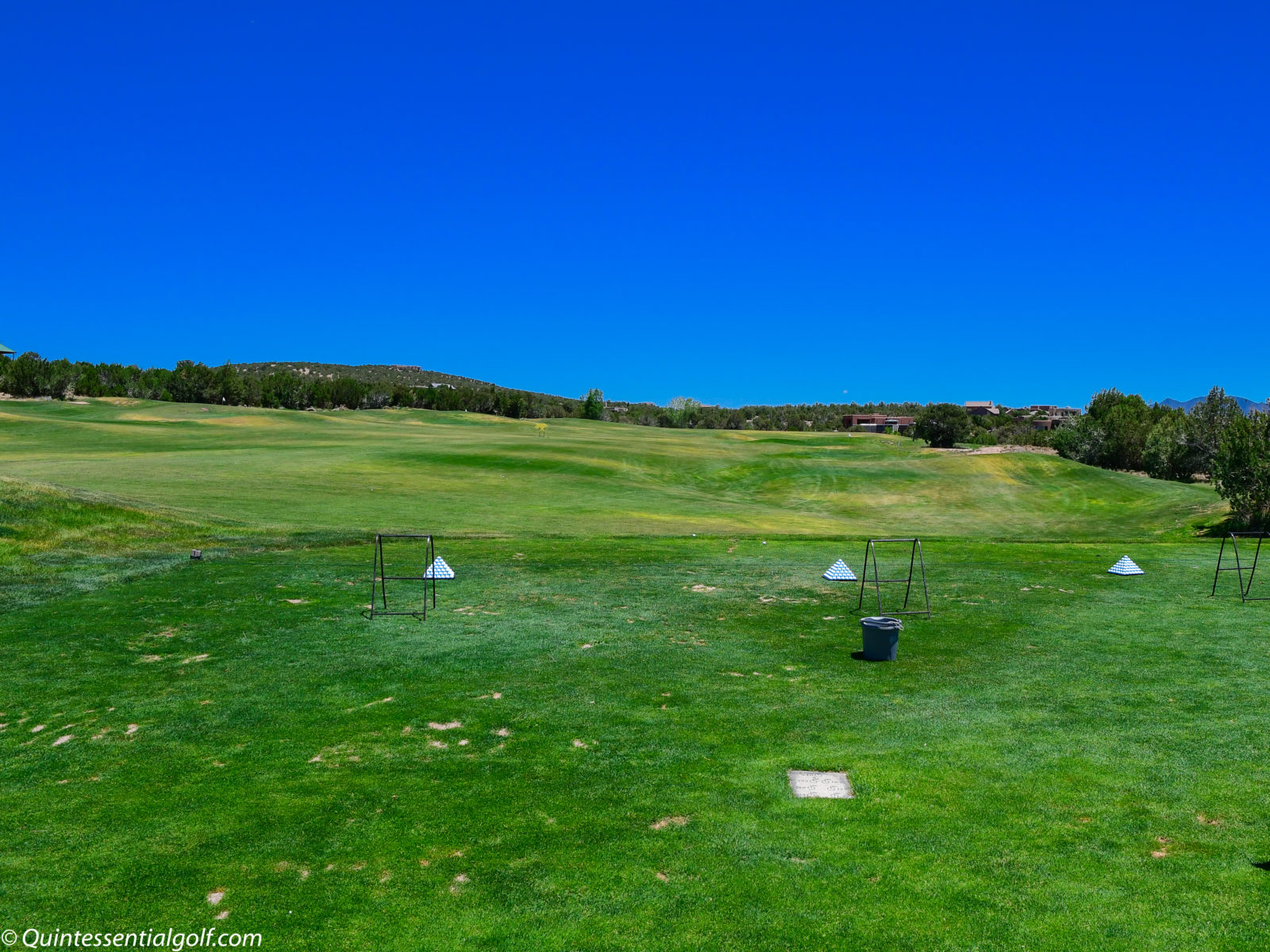
Speaking of the range: it’s worth arriving early to use it. Paa-Ko Ridge has a full practice facility with a driving range, putting and chipping greens and a practice bunker, plus on-site instruction and club fitting if you want to tune your equipment before tackling the elevation changes. Given how much the terrain plays into club selection here, a warm-up on the range isn’t optional the way it might be at a flatter course.
The Golf
The conditioning is excellent, although “manicured” isn’t quite the word I would use. That’s a compliment. The groundskeepers intentionally maintain the edges to retain a natural look, while the bentgrass greens and Kentucky bluegrass fairways provide first-rate playing surfaces. The course feels cared for without looking overly groomed or artificial.
Miss those fairways, however, and things can get interesting.
The rough can be thick, and beyond it are rocks, cactus, arroyos, and other native vegetation that have a way of swallowing golf balls. After investigating a couple of those areas, you quickly learn that sometimes the smartest play is to leave the ball where it is and return to safety.
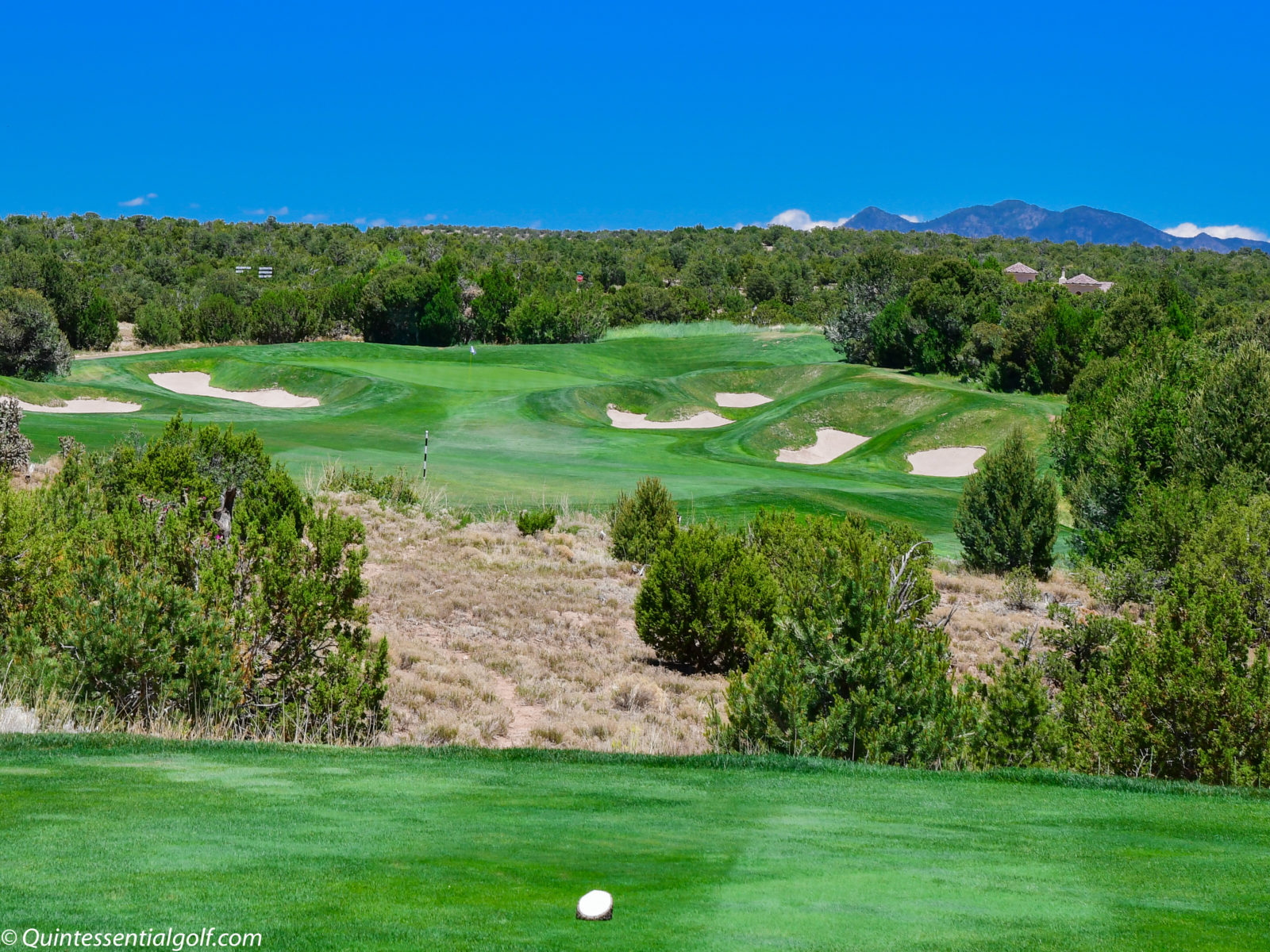
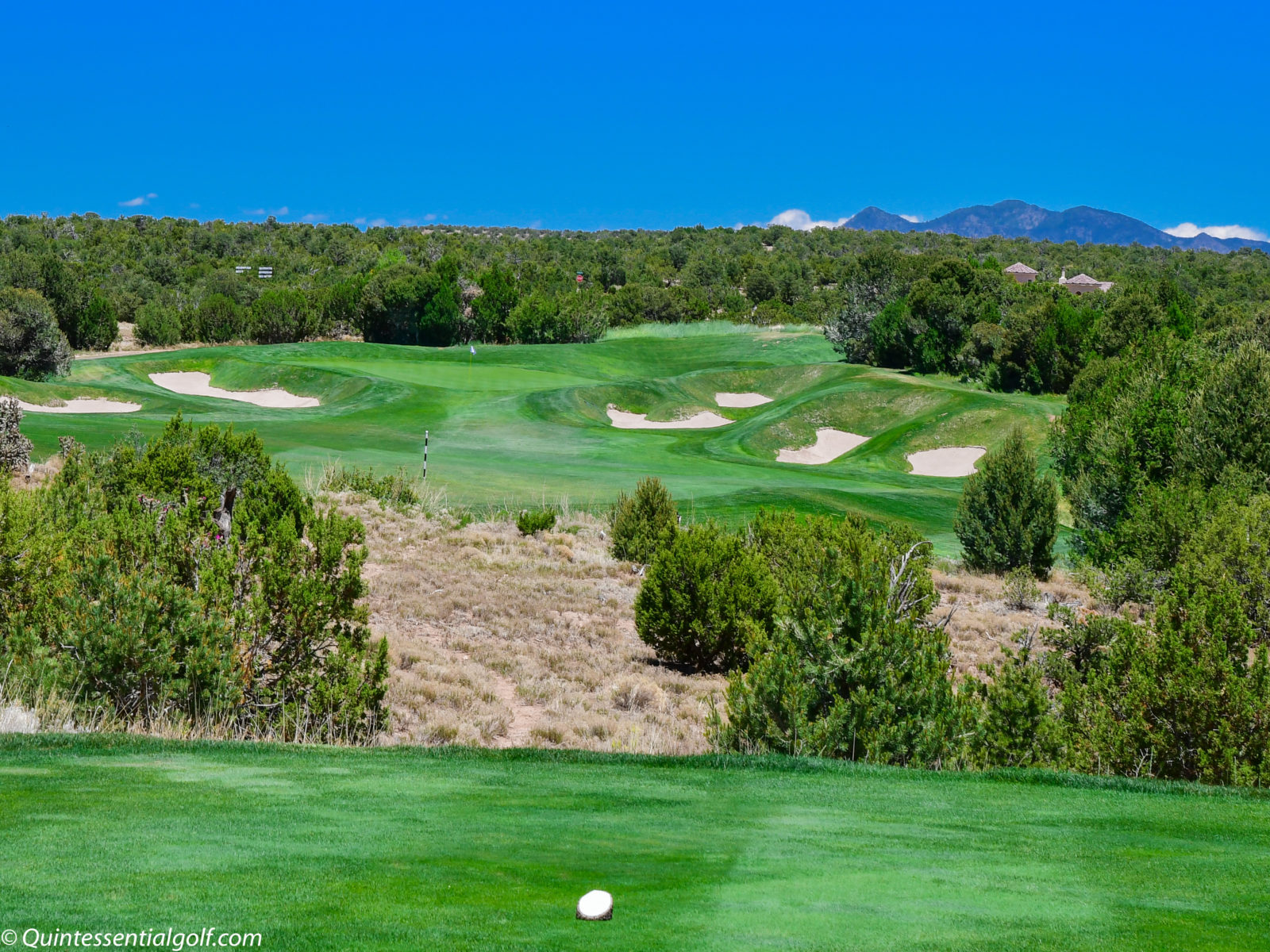
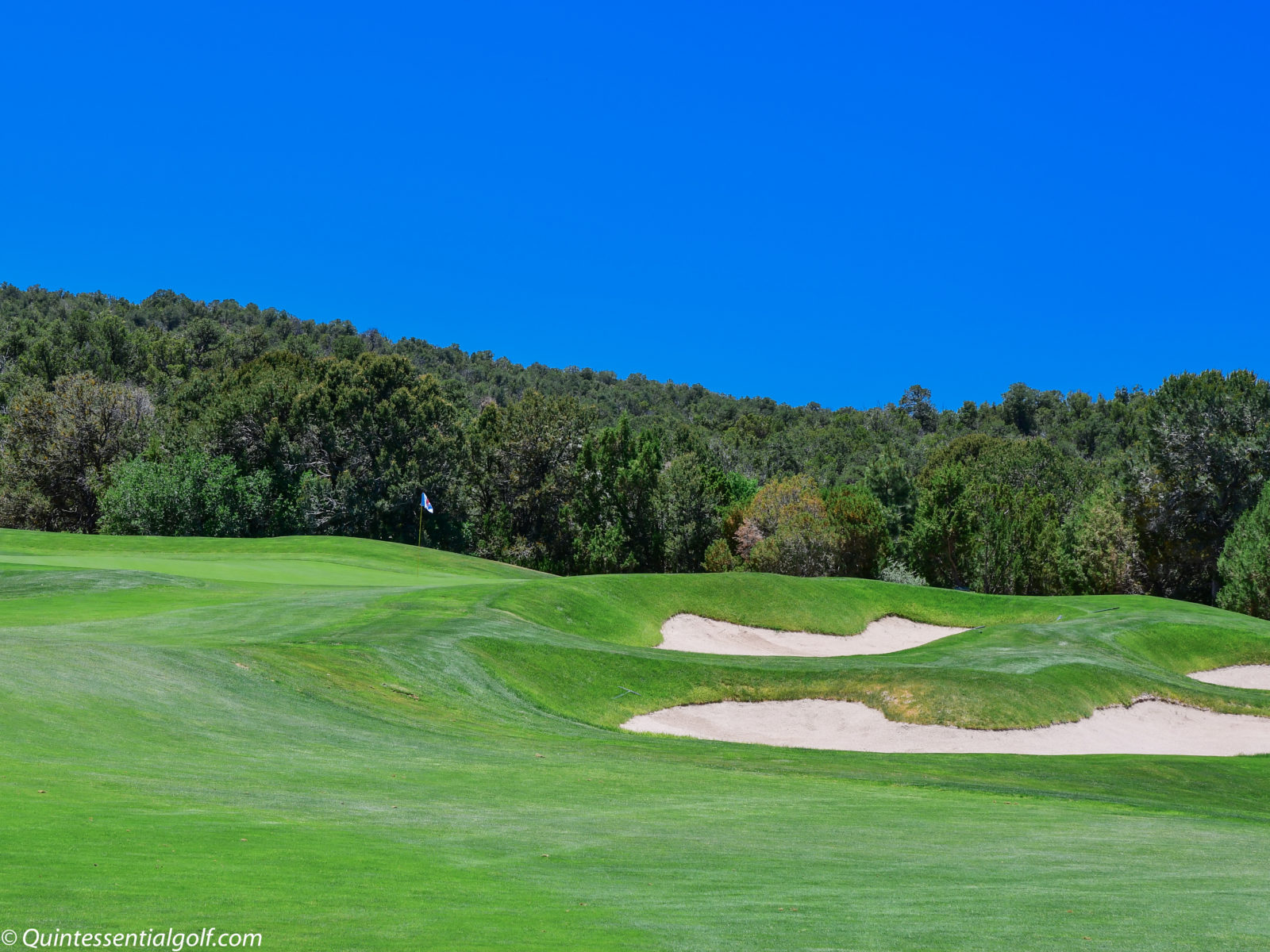
The golf is every bit as interesting as the surroundings. There are intimidating forced carries that require you to commit to the tee shot. Fairways frequently sit on plateaus or slope toward thick grass-covered depressions. A fairway may look generous from the tee, but miss the correct portion and gravity can take over. The effective landing area is often considerably narrower than it first appears.
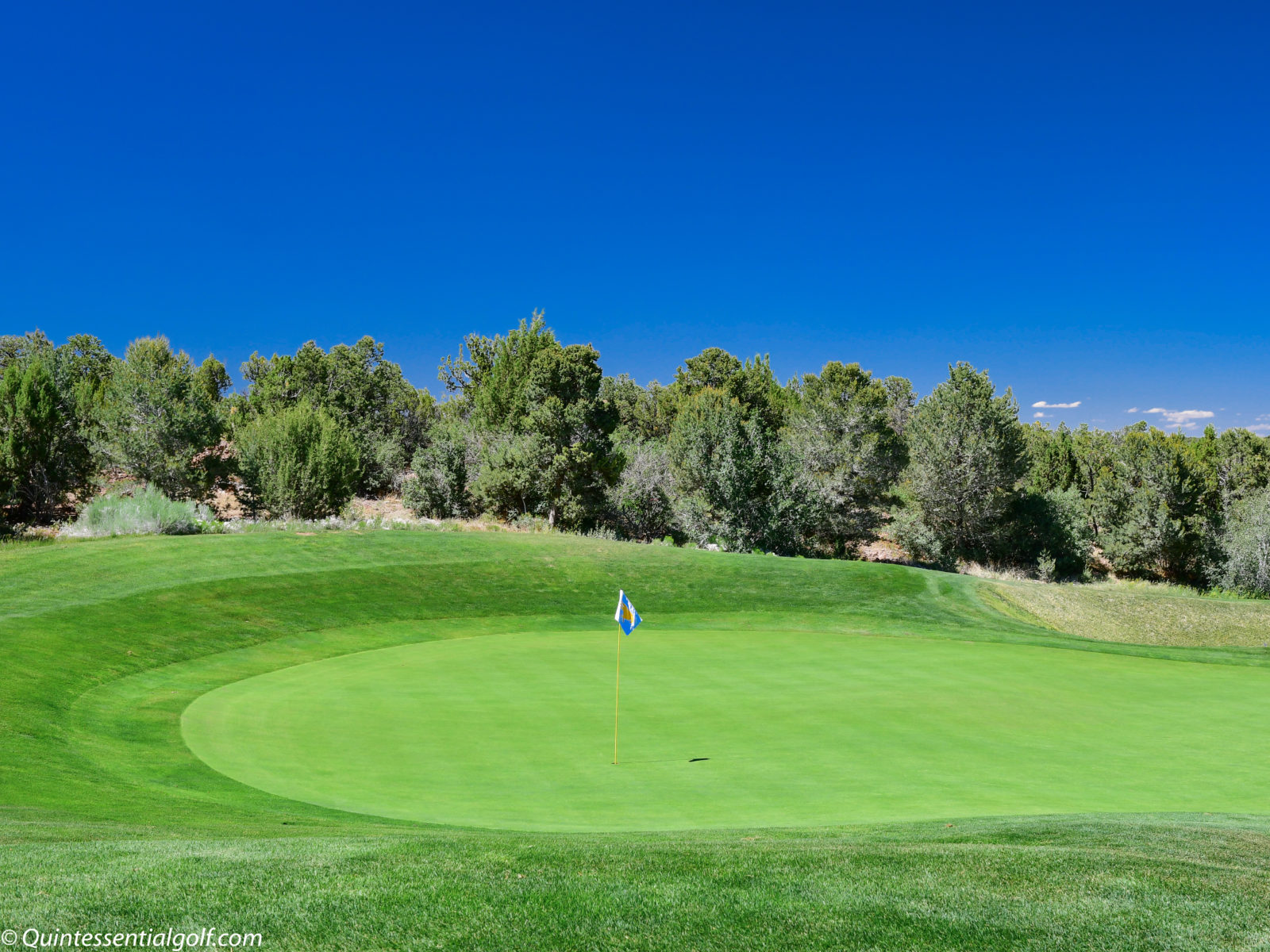
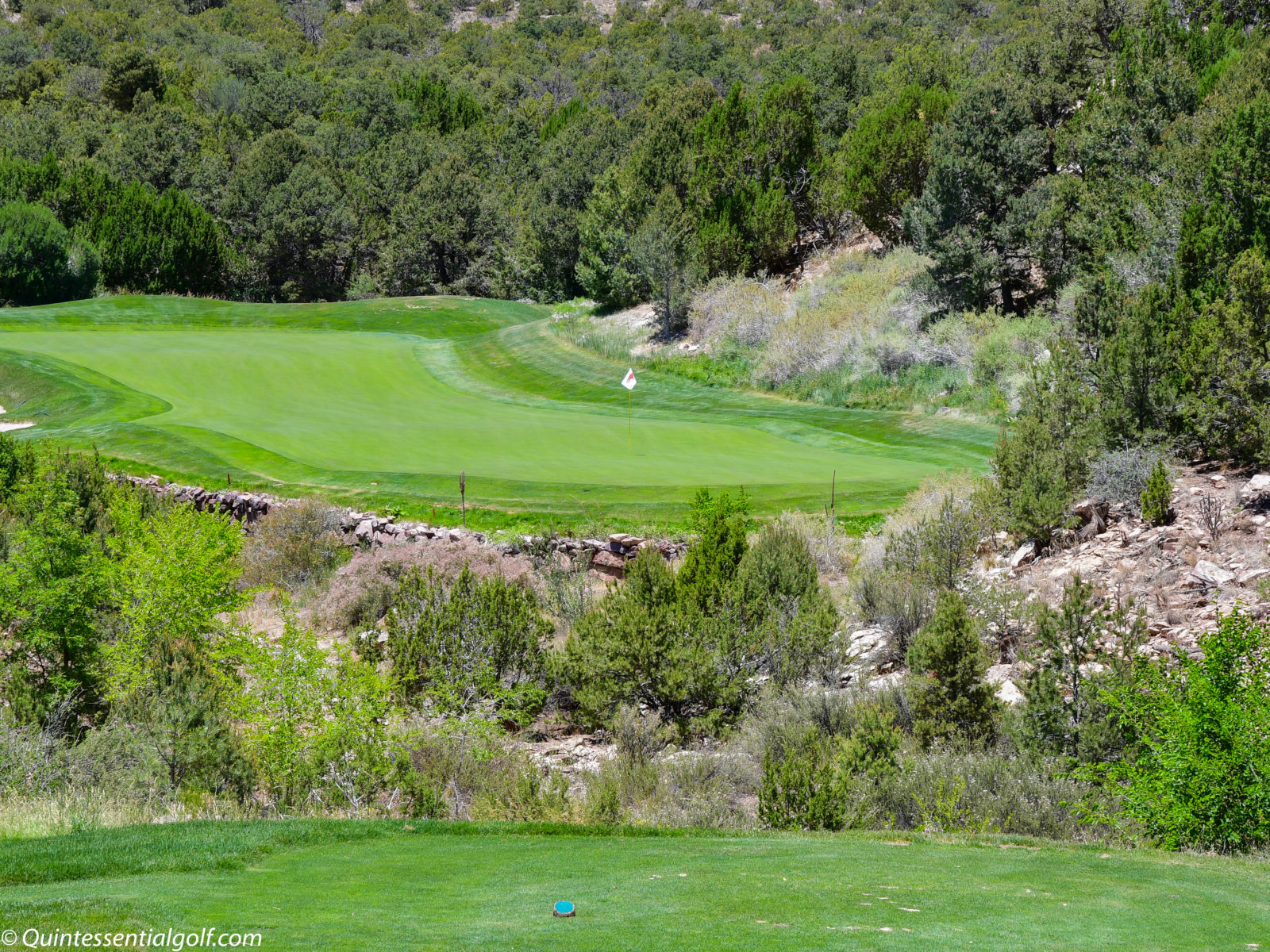
Nowhere is that more apparent than the par-3 fourth, nicknamed “Dye-abolical,” where the tee shot plays across an arroyo to what’s reputed to be the largest putting surface in New Mexico — a triple-tiered green that measures 100 yards from front to back with a 13-foot drop across it. Where the flag sits changes the hole entirely, and three-putts here are not embarrassing; they’re common.
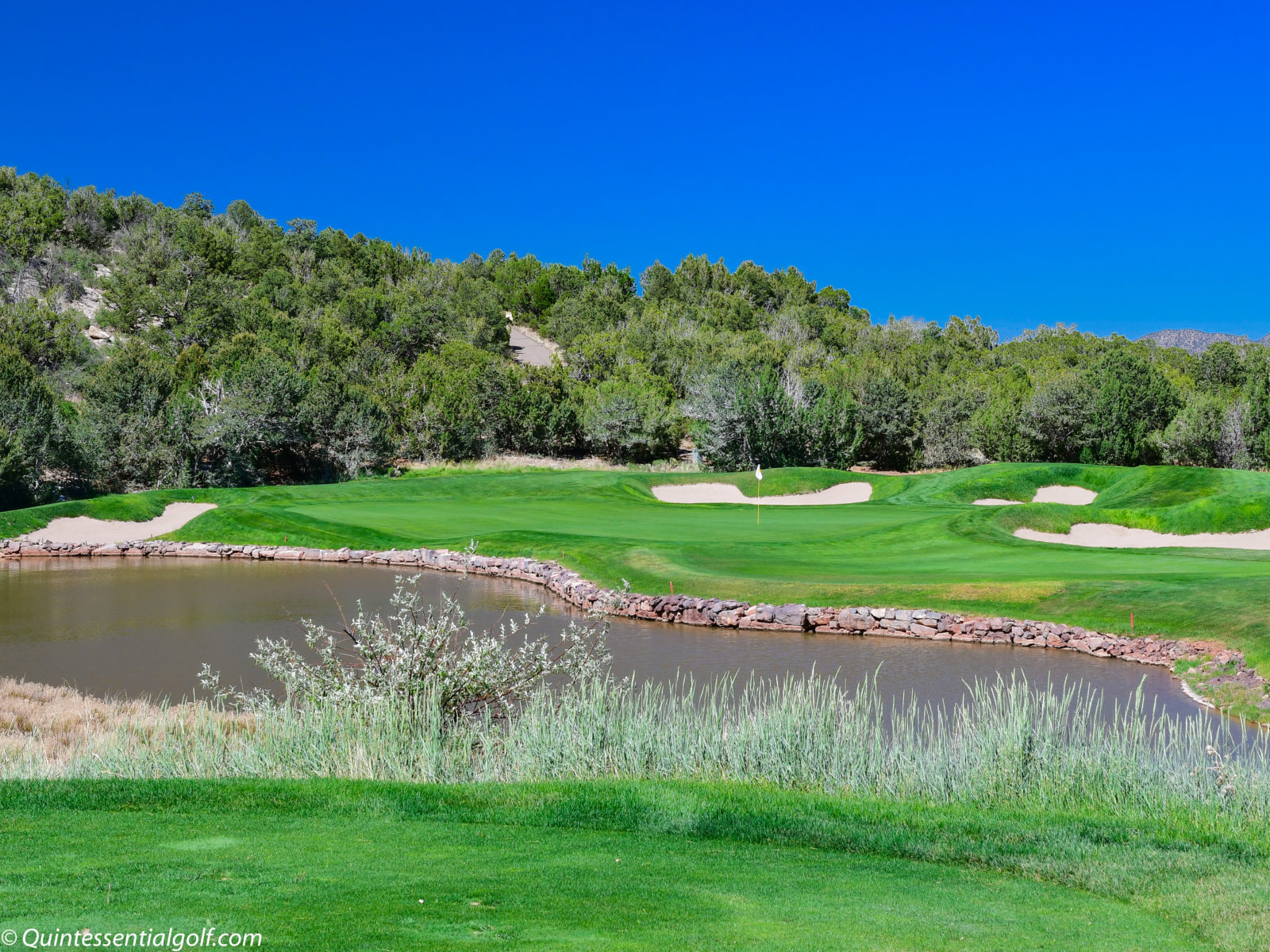
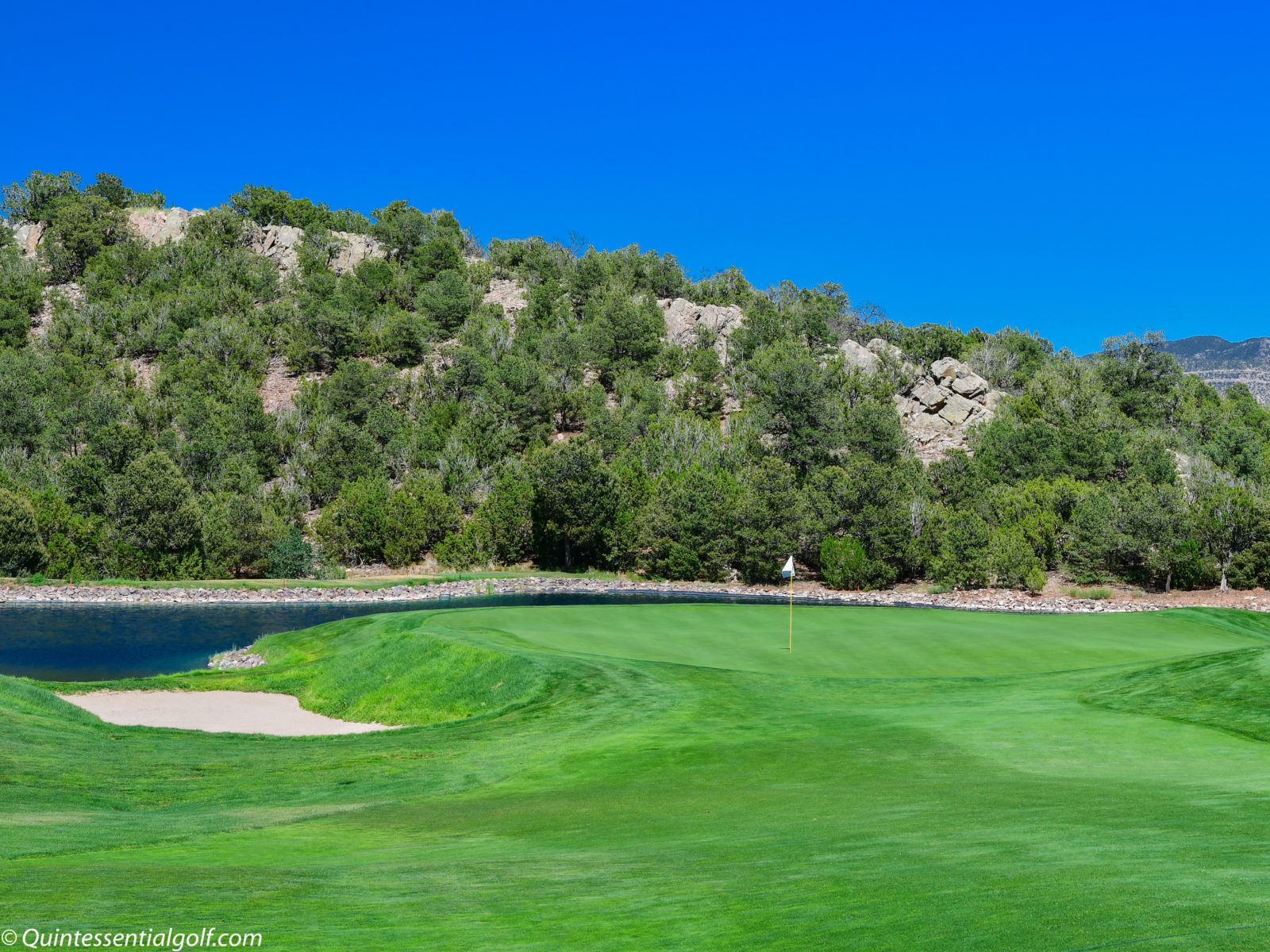
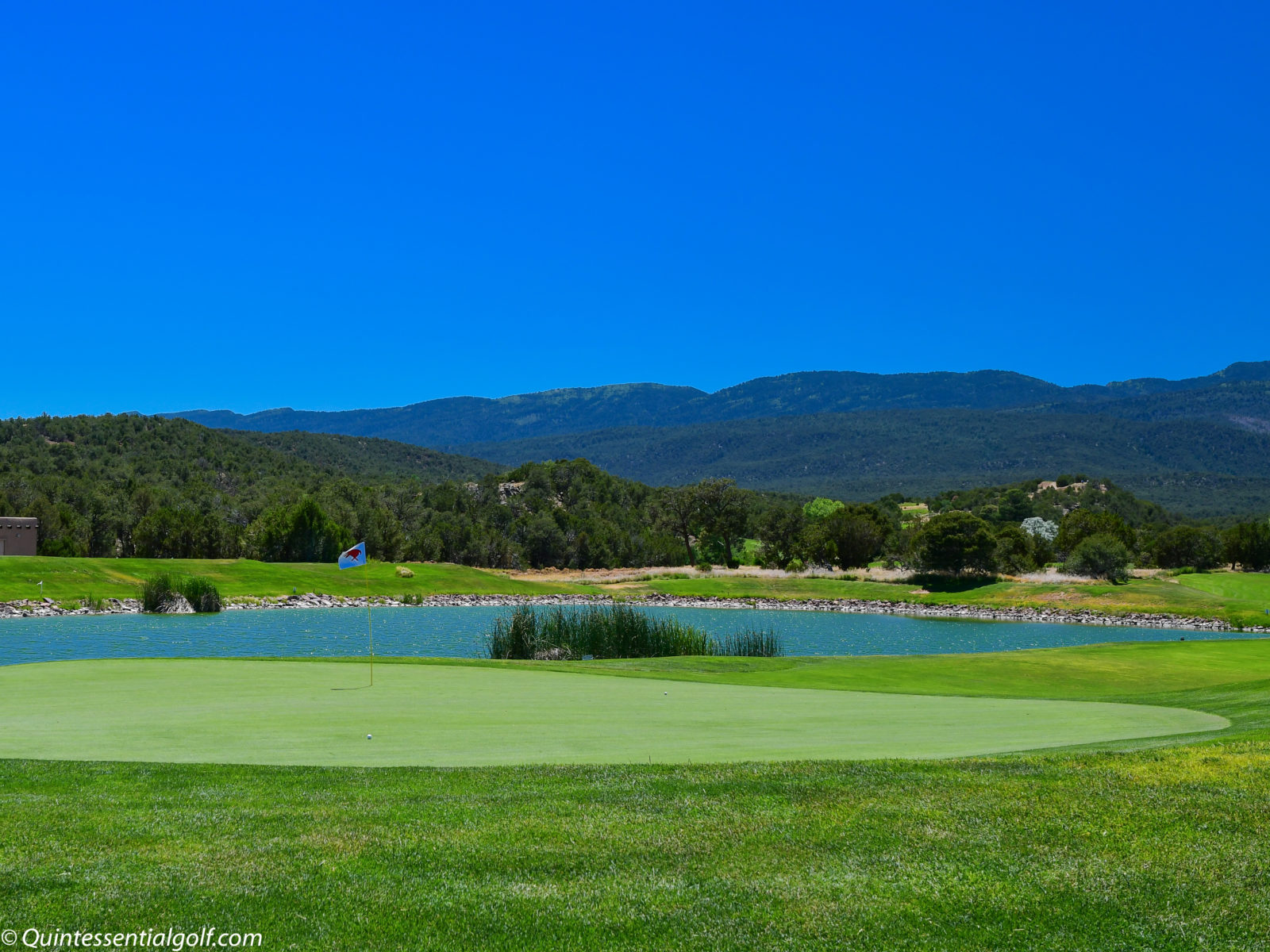
The 16th is a beautiful short par-3 played across a rock-walled water hazard to a large, well-bunkered green, with dense junipers creating the backdrop. It’s the hole you photograph before you play, then think about it differently once you’re standing on the tee.
Three Nines, Three Personalities
Paa-Ko Ridge comprises three nine-hole layouts, each winding through the mountainous terrain and each with its own character. The original 18 opened in 2000 to immediate acclaim — Golf Digest named it the No. 1 Best New Course in America that year — and a third nine was added in 2006, giving the club the flexibility of 27 holes and three possible 18-hole combinations.
The front nine is considered the most forgiving of the three, though “forgiving” is relative on a course like this. The second nine is widely regarded as the most scenic, climbing and dropping through the foothills and home to the club’s signature 17th hole. Among the group, the third nine is the longest and toughest, featuring three long par-3s and a series of challenging par-5s, including the 625-yard “Muirfield” hole, named after the Scottish original known for hosting numerous Open Championships.
The name itself has a connection to the area’s history. Paa-Ko means “root of the cottonwood tree” and comes from the nearby ruins of a Tano pueblo, an important archaeological site excavated during the 1930s.
Explore other Southwest golf course profiles from Quintessential Golf Magazine